

Nausea and dizziness can occur together for many different reasons and may range from temporary discomfort to symptoms that need medical evaluation. Common causes can include dehydration, changes in blood pressure, medication effects, inner-ear problems, migraines, infections, or anxiety. The duration, severity, and other symptoms occurring at the same time can help determine when medical attention may be needed.
Understanding the nausea and dizziness causes can help you know when to seek care. If these symptoms occur with severe headache, chest pain, trouble breathing, fainting, weakness, trouble walking, vision changes, confusion, or slurred speech, seek emergency medical attention. This guide explains common causes, related symptoms, warning signs, diagnosis, treatment options, and when to see a primary care provider.
Nausea and Dizziness: What Do These Symptoms Mean?
Nausea and Dizziness are two different symptoms that can occur together.
Nausea is the uncomfortable feeling that you may vomit. It can occur with digestive problems, infections, medications, migraines, motion sickness, and several other conditions.
Dizziness may describe feeling lightheaded, faint, unsteady, or as if the surroundings are spinning. Vertigo is a specific type of dizziness involving a sensation of spinning or movement.
Because the nausea and dizziness difference can sometimes be difficult to recognize, paying attention to how your symptoms feel can help your healthcare provider understand what may be happening.
For example, feeling as though you may faint after standing up may be different from experiencing a spinning sensation when turning your head.
Top Causes of Nausea and Dizziness
There are many possible nausea and dizziness causes. Some are temporary and mild, while others may require medical evaluation.
- Dehydration
Not drinking enough fluids or losing fluids through vomiting, diarrhea, fever, sweating, or illness can contribute to dizziness. Dehydration may also cause weakness, fatigue, thirst, and darker urine.
This can make dizziness dehydration fatigue symptoms occur together, especially during illness or hot weather.
- Low Blood Pressure
A sudden drop in blood pressure can cause lightheadedness, particularly when you stand up quickly. This is one reason dizziness and low blood pressure may occur together.
If dizziness repeatedly happens when standing, discuss it with a healthcare provider.
- Inner-Ear Problems and Vertigo
The inner ear helps control balance. Conditions such as benign paroxysmal positional vertigo (BPPV) and other inner-ear disorders can cause dizziness or vertigo, sometimes along with nausea, vomiting, sweating, or balance problems.
Understanding nausea and vertigo symptoms can help distinguish a spinning sensation from general lightheadedness.
- Migraines
Migraines can sometimes involve dizziness, nausea, sensitivity to light, and headache. When headache nausea and dizziness symptoms occur together, a healthcare provider may consider migraine among the possible causes.
- Medications
Some medicines can cause dizziness or nausea as side effects. If symptoms begin after starting or changing a medication, tell your healthcare provider rather than stopping prescribed medicine on your own.
- Anxiety and Stress
Anxiety and panic can be associated with dizziness, nausea, rapid breathing, sweating, and a feeling of weakness or uneasiness. This means dizziness and anxiety symptoms may occur together.
However, new or severe symptoms should not automatically be attributed to anxiety. A healthcare provider can help determine whether another condition may be contributing.
- Other Possible Causes
Other nausea and dizziness reasons may include:
- Viral illnesses
- Motion sickness
- Low blood sugar
- Migraine
- Heat-related illness
- Certain medications
- Head injury
- Neurological and Heart-related problems
The cause cannot always be determined from symptoms alone, so persistent or unexplained Nausea and Dizziness may require an evaluation.
Understanding Nausea and Dizziness Based on When They Occur
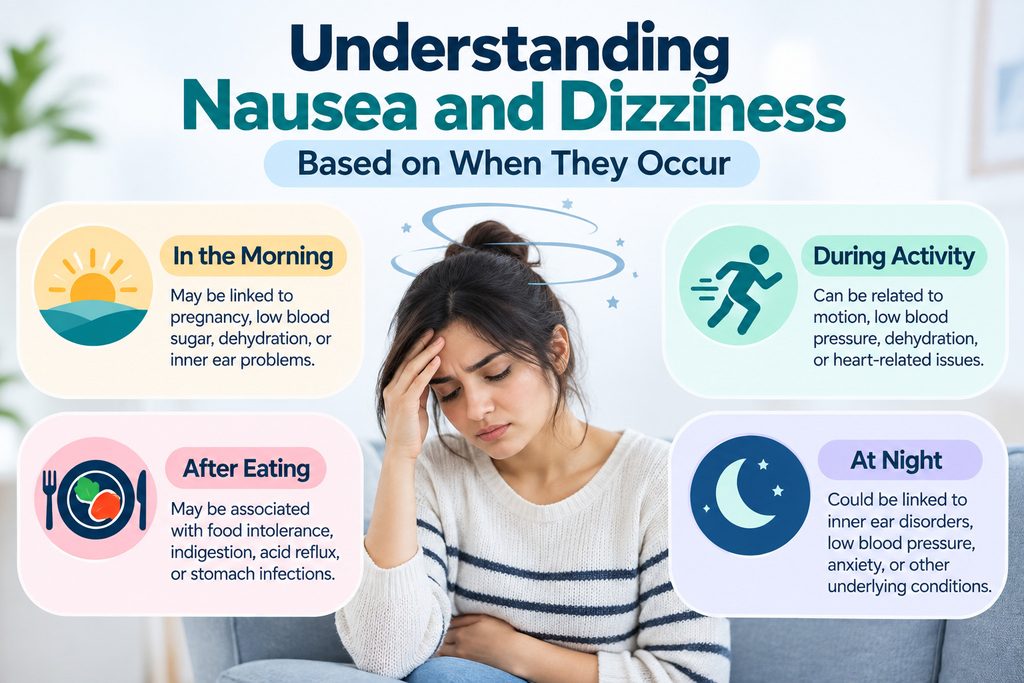
The timing of Nausea and Dizziness may provide useful information.
1.Nausea and Dizziness in the Morning
Morning symptoms may occur for different reasons, including dehydration, illness, medication effects, migraine, or other health concerns. If morning symptoms happen frequently or interfere with your daily activities, consider discussing them with a healthcare provider.
2.Nausea and Dizziness After Eating
Symptoms after eating may be associated with digestive problems, blood sugar changes, food-related illness, or other causes. Repeated symptoms after meals should be evaluated rather than ignored.
3.Nausea and Dizziness When Standing
If you experience dizziness and blurred vision when standing up, sit or lie down safely until the feeling passes. Getting up slowly can help reduce dizziness related to sudden changes in position.
Frequent episodes should be discussed with a healthcare provider, especially if they are becoming more severe or frequent.
4.Sudden Dizziness While Sitting
Sudden dizziness while sitting can have several possible causes. If it is new, severe, recurring, or accompanied by other concerning symptoms, medical evaluation may be appropriate.
Other Symptoms That May Occur With Nausea and Dizziness
Nausea and Dizziness can occur with other symptoms depending on the underlying cause.
You may experience:
- Headache
- Fatigue or weakness
- Vomiting & Sweating
- Blurred or double vision
- Ringing in the ears
- Balance problems
- Lightheadedness & Spinning sensations
- Abdominal discomfort & Trouble walking
For example, dizziness and sweating suddenly may occur with several different conditions and should be considered alongside other symptoms.
Similarly, dizziness and low oxygen levels may sometimes be discussed together when a person also has breathing difficulties, but dizziness alone cannot determine whether oxygen levels are low. A healthcare provider may need to evaluate breathing, circulation, vital signs, and other symptoms.
- Nausea, Dizziness, and Fatigue
The difference between nausea, dizziness and fatigue is important because these are separate symptoms.
Nausea involves an urge to vomit, dizziness involves sensations such as lightheadedness or spinning, and fatigue refers to unusual tiredness or lack of energy. They can occur together during illnesses, dehydration, medication effects, or other health conditions.
- Nausea, Dizziness, and Neurological Symptoms
Some neurological conditions can cause dizziness or vertigo. Dizziness and nausea neurological disorders may occur with other neurological symptoms such as balance problems, weakness, vision changes, coordination difficulties, or speech changes.
Because dizziness and neurological problems can sometimes require urgent evaluation, sudden symptoms involving speech, movement, vision, or coordination should not be ignored.
How Long Should Nausea and Dizziness Last?
There is no single amount of time that applies to everyone. Some episodes of dizziness may last seconds or longer, while nausea may improve as the underlying trigger resolves.
You should consider medical evaluation when Nausea and Dizziness:
- Keep coming back
- Start suddenly without an obvious reason
- Become severe
- Last longer than expected
- Interfere with normal activities
- Occur with other concerning symptoms
- Begin after a medication change
- Are accompanied by repeated vomiting or difficulty keeping fluids down
Persistent or recurring symptoms may indicate an underlying condition that needs evaluation.
When Should You See a Doctor for Nausea and Dizziness?
You should consider seeing a healthcare provider if Nausea and Dizziness are new, recurring, persistent, unexplained, or interfering with your daily life.
A medical evaluation is especially important if:
- Symptoms continue or repeatedly return.
- Dizziness begins suddenly.
- You frequently feel faint or unsteady.
- You have repeated vomiting.
- You cannot keep enough fluids down.
- Symptoms started after taking or changing a medicine.
- You experience hearing changes.
- You have unexplained balance problems.
- Symptoms are becoming more frequent or severe.
A medical provider can review your symptoms, medical history, medications, and other health factors to help identify the possible cause.
Nausea and Dizziness Warning Signs
Some symptoms require urgent medical attention.
Seek emergency care for sudden dizziness and trouble walking, especially when it occurs with other neurological symptoms. Emergency warning signs can include:
- Sudden weakness or numbness
- Trouble speaking or slurred speech
- Sudden vision changes
- Severe or unusual headache
- Trouble walking or loss of coordination
- Fainting & Seizures
- Chest pain or Trouble breathing
- Rapid or irregular heartbeat
- Confusion
- Ongoing vomiting
These symptoms can sometimes indicate serious conditions, including stroke or cardiovascular problems, and should not be ignored.
In particular, sudden loss of balance and slurred speech requires emergency evaluation because these can be warning signs of a neurological emergency.
If you are experiencing a medical emergency, call 911 rather than waiting for a routine primary care appointment.
How Healthcare Providers Diagnose the Cause
There is no single test for Nausea and Dizziness. Your provider will first ask about your symptoms and health history.
You may be asked:
- When did the symptoms begin?
- How long does each episode last?
- Does the dizziness feel like spinning or lightheadedness?
- Does standing or moving make it worse?
- Are you experiencing nausea, vomiting, headache, or fatigue?
- Have you recently been sick?
- Have you started or changed any medications?
- Do you have hearing or vision changes?
- Have you experienced balance or walking problems?
Your provider may also perform a physical examination and check vital signs, balance, walking, hearing, or other relevant functions. Depending on your symptoms, additional tests may be recommended.
The goal is to identify the underlying cause rather than simply treat the symptom.
Treatment Options for Nausea and Dizziness

The appropriate nausea and dizziness treatment depends on what is causing the symptoms.
Treatment may involve:
- Increasing fluids when dehydration is contributing
- Addressing low blood pressure or other underlying conditions
- Reviewing medications that may contribute to symptoms
- Treating an underlying infection or illness
- Managing migraine when appropriate
- Addressing inner-ear or balance disorders
- Treating anxiety or other contributing conditions
- Using specific medicines when recommended by a healthcare provider
There is no single nausea and dizziness medicine that is appropriate for everyone. Medication should be selected based on the underlying cause and your individual health needs.
For sudden dizziness and nausea treatment, the first priority is determining whether the symptoms represent an emergency. Severe or sudden symptoms accompanied by neurological, cardiac, breathing, or other warning signs require emergency medical care rather than self-treatment.
About Primary Care of Southern Texas
Primary Care of Southern Texas provides comprehensive primary care services for patients in Cypress, TX, and surrounding communities. The clinic focuses on preventive care, acute care, chronic disease management, routine evaluations, and personalized health plans.
Dr. Mohit Gupta is a board-certified physician with extensive experience in patient care and medical education. The practice emphasizes compassionate, patient-centered care and serves Cypress as well as nearby communities including Hockley, Waller, Tomball, Magnolia, and Katy.
Comprehensive Nausea and Dizziness Care in Cypress, TX
If you are experiencing recurring or unexplained Nausea and Dizziness, a primary care evaluation can help determine what may be contributing to your symptoms.
At Primary Care of Southern Texas, your provider can review your symptoms, medical history, medications, and relevant health factors. The clinic offers comprehensive primary care, acute care, preventive services, and lab testing that may support the evaluation of different health concerns.
The goal is to understand your symptoms and provide appropriate guidance based on your individual health needs.
Why Choose Primary Care of Southern Texas for Nausea and Dizziness Care?
Choosing the right primary care provider can make it easier to address recurring or unexplained symptoms. Primary Care of Southern Texas focuses on patient-centered care and individualized health plans.
- Comprehensive Evaluation
Your symptoms may have several possible causes. A thorough review can help your provider understand when the symptoms occur, what makes them worse, and what other symptoms may be present.
- Personalized Care
Every patient has different health needs. Your provider can develop recommendations based on your medical history, symptoms, medications, and overall health.
- Convenient Cypress Location
Primary Care of Southern Texas is located at Cypress Medical Plaza and serves patients in Cypress and surrounding communities, including Hockley, Waller, Tomball, Magnolia, and Katy.
- Patient-Centered Approach
The practice emphasizes communication, compassionate care, and building long-term relationships with patients. This approach can help you feel more comfortable discussing symptoms that may be difficult to explain.
At Primary Care of Southern Texas, our team provides personalized care to understand the possible causes of Nausea and Dizziness and guide you toward appropriate treatment.
Book Your Nausea and Dizziness Evaluation with Primary Care
Don’t ignore recurring, unexplained, or worsening Nausea and Dizziness. Primary Care of Southern Texas can help evaluate your symptoms and determine whether further testing, treatment, or follow-up care may be appropriate.
Primary Care of Southern Texas
Address: Cypress Medical Plaza, 27160 US-290 Suite #207, Cypress, TX 77433
Phone: (713) 673-8774
Email: backoffice@stxprimarycare.com
If you are experiencing severe dizziness with chest pain, trouble breathing, fainting, sudden weakness, slurred speech, severe headache, or difficulty walking, seek emergency medical care instead of waiting for a routine appointment.
Conclusion
Nausea and Dizziness can have many causes, including dehydration, blood pressure changes, medications, migraines, inner-ear problems, illness, and anxiety. While occasional symptoms may improve, recurring, sudden, severe, or unexplained symptoms should be medically evaluated.
Warning signs such as trouble walking, slurred speech, weakness, vision changes, severe headache, chest pain, breathing difficulty, fainting, or ongoing vomiting require urgent medical attention. If your Nausea and Dizziness keep returning or affect daily life, talk with a healthcare provider to identify the possible cause and discuss appropriate treatment.
FAQs: Nausea and Dizziness: When Should You See a Doctor?
Q1. How long should I wait to see a doctor for dizziness?
Ans. You should consider seeing a doctor if dizziness is sudden, severe, keeps returning, lasts a long time, has no clear cause, or affects your daily activities.
Q2. How do I tell if my dizziness is serious?
Ans. Dizziness is more concerning when it occurs with severe headache, chest pain, trouble breathing, fainting, weakness, vision changes, confusion, slurred speech, or trouble walking. These symptoms require urgent medical attention.
Q3. Is it better to lay down when nauseous?
Ans. If nausea is accompanied by dizziness or lightheadedness, sitting or lying down in a safe place can help prevent falls while the symptoms pass. Move slowly when getting up and stay hydrated when appropriate.
Q4. Can anxiety cause dizziness?
Ans. Yes. Anxiety and panic can be associated with dizziness and other physical symptoms. However, new or severe dizziness should not automatically be assumed to be anxiety-related and may need medical evaluation.
Q5. How do I know if my nausea is serious?
Ans. Seek medical attention if nausea occurs with severe abdominal pain, severe headache or stiff neck, blood in vomit, signs of dehydration, or persistent vomiting.