
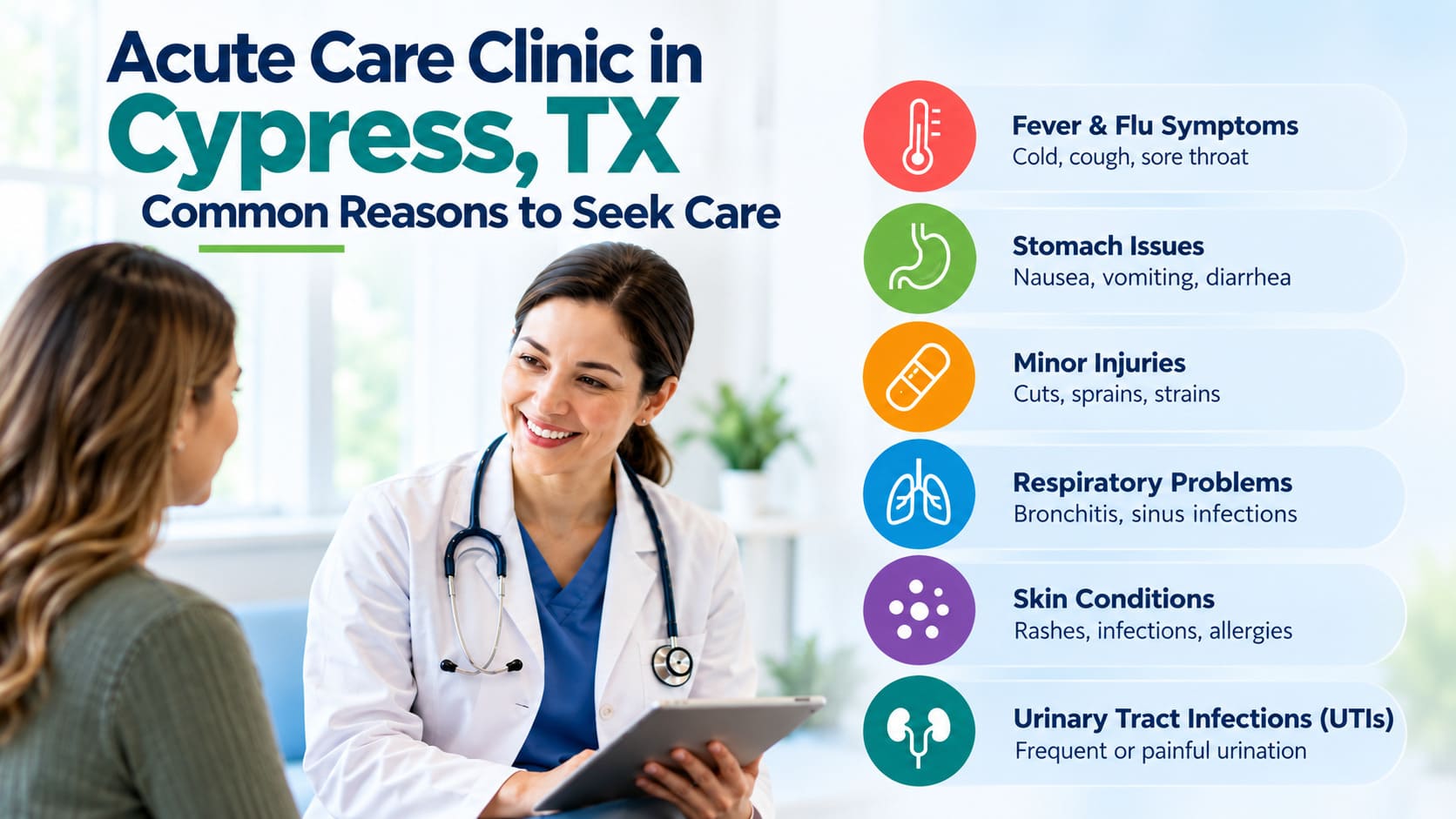
Sudden illnesses and minor injuries can happen when you least expect them and may require medical attention sooner than a routine appointment. An Acute Care Clinic can provide evaluation and treatment for health concerns that need prompt attention but may not require emergency room services.
Understanding when to seek acute care can help you choose the appropriate level of medical support. From common illnesses and minor injuries to symptoms that need same-day evaluation, knowing your care options can make it easier to respond to unexpected health concerns.
Understanding Acute Care
Acute care refers to medical care provided for health conditions that develop suddenly or require timely evaluation and treatment. Unlike routine preventive visits, acute care focuses on addressing a current illness, symptom, or injury.
An Acute Care Clinic may provide outpatient evaluation for certain short-term health concerns. Depending on the condition, care may involve a physician, physician assistants, or other qualified healthcare professionals.
Acute care can include evaluation and management of illnesses, minor injuries, infections, and other conditions that require prompt attention.
Common Reasons to Visit an Acute Care Clinic
People may seek care for a variety of sudden or short-term health concerns. Common reasons can include:
- Fever or flu-like symptoms
- Cough, congestion, or sore throat
- Ear or sinus problems
- Minor infections
- Nausea, vomiting, or diarrhea
- Minor cuts or injuries
- Mild allergic reactions
- Urinary symptoms
- Sudden worsening of an existing health concern
- Other symptoms that require timely medical evaluation
An Acute Care Clinic can help assess your symptoms and determine whether outpatient treatment is appropriate or whether you need another level of care.
Acute Illnesses That May Need Prompt Medical Attention
Some illnesses can develop quickly and may require evaluation before a routine primary care appointment is available. Respiratory infections, gastrointestinal illnesses, urinary infections, and certain allergic conditions are examples of problems that may require prompt assessment.
People with respiratory conditions should also pay attention to symptoms such as significant breathing difficulty or an asthma attack. Symptoms that are severe, rapidly worsening, or associated with serious breathing problems may require emergency evaluation rather than acute outpatient care.
Minor Injuries That May Require Acute Care

An Acute Care Clinic may also be appropriate for certain minor injuries that require evaluation but are not life-threatening.
Examples can include:
- Minor cuts and wounds
- Sprains and strains
- Mild bruising
- Minor burns
- Other uncomplicated injuries
Some injuries may require imaging, specialist evaluation, or additional treatment. If an injury involves severe bleeding, significant deformity, loss of consciousness, or another serious symptom, Emergency Acute Care may be more appropriate.
Common Symptoms Treated at an Acute Care Clinic
The symptoms treated at an acute care facility can vary depending on the patient’s condition and the services available. Common symptoms may include fever, cough, sore throat, congestion, mild abdominal discomfort, nausea, vomiting, diarrhea, and symptoms related to minor infections.
An Acute Care Clinic can evaluate the symptoms and medical history to help determine the appropriate next step. Depending on the findings, this may include outpatient treatment, follow-up with primary care, or referral for additional evaluation.
Acute Care Clinic vs. Urgent Care vs. Emergency Care
Although Acute Care, Urgent Care, and emergency services all address health concerns that may require prompt attention, they are not interchangeable. An Acute Care Clinic generally focuses on evaluating and managing certain short-term illnesses, symptoms, and minor health concerns in an outpatient setting.
An urgent care clinic or urgent care center is commonly used for conditions that require prompt attention but are not life-threatening and cannot wait for a routine appointment. Emergency Care is designed for potentially serious or life-threatening conditions requiring immediate medical attention. Hospital emergency departments have access to emergency care units and resources for managing severe medical conditions.
The right setting depends on the severity and nature of your symptoms.
When Should You Seek Emergency Medical Attention?
An Acute Care Clinic is not a replacement for emergency services. Seek emergency medical attention for serious or potentially life-threatening symptoms such as:
- Severe difficulty breathing
- Chest pain or pressure
- Severe or uncontrolled bleeding
- Loss of consciousness
- Sudden severe weakness or confusion
- Signs of a serious allergic reaction
- Severe injuries
- Symptoms of a possible stroke
If you believe you are experiencing a medical emergency or go to the nearest emergency department.
How an Acute Care Clinic Can Support Your Health

An Acute Care Clinic can provide timely evaluation when you develop a sudden illness, symptom, or minor injury. The healthcare team can review your symptoms, medical history, and current concerns to determine an appropriate course of care.
Acute care may also help you understand whether your condition can be managed through outpatient treatment or whether you need follow-up with your primary care provider, a specialist, or another healthcare facility.
About Primary Care of Southern Texas
At Primary Care of Southern Texas, patient-focused care is designed around understanding each patient’s symptoms, medical history, lifestyle, and healthcare needs.
When you experience a sudden illness or health concern, the team can evaluate your symptoms and help determine the appropriate next steps. The practice focuses on providing personalized care while helping patients understand their available healthcare options.
Why Choose Primary Care of Southern Texas for Acute Care in Cypress, TX?
Choosing the right healthcare setting can make it easier to address unexpected health concerns promptly. Primary Care of Southern Texas provides patient-focused care for individuals seeking evaluation of acute health symptoms in Cypress, TX.
The practice can support patients through:
- Personalized Evaluation of Current Symptoms: Your provider can assess your current symptoms, their severity, duration, and any changes to better understand your immediate healthcare needs.
- Review of Medical History: Your medical history, existing health conditions, medications, allergies, and previous treatments can provide important context when evaluating a new or worsening health concern.
- Assessment of Acute Health Concerns: The healthcare team can evaluate sudden illnesses, minor injuries, infections, or other concerns that may require timely medical attention.
- Guidance About Appropriate Treatment Options: Based on your symptoms and evaluation, your provider can discuss suitable treatment approaches and explain the next steps for managing your condition.
- Preventive and Ongoing Primary Care: In addition to addressing acute concerns, ongoing primary care can support preventive healthcare, routine checkups, and management of long-term health needs.
- Recommendations for Further Evaluation When Needed: If your symptoms require additional testing, specialist care, or a different level of medical attention, your provider can recommend appropriate follow-up.
If your symptoms are sudden but do not appear to be life-threatening, discussing your concerns with a healthcare provider can help determine the appropriate next step. Prompt evaluation may also help identify the cause and prevent the condition from becoming more serious.
Schedule an Acute Care Appointment in Cypress, TX
If you are experiencing a sudden illness, minor injury, or other health concern that requires prompt evaluation, an Acute Care Clinic may be an appropriate option.
Primary Care of Southern Texas can help evaluate your symptoms and discuss the next steps based on your individual healthcare needs.
Primary Care of Southern Texas
Cypress Medical Plaza, 27160 US-290 Suite #207
Cypress, TX 77433
Phone: (713) 673-8774
Email: backoffice@stxprimarycare.com
Conclusion
An Acute Care Clinic can provide timely outpatient evaluation for certain sudden illnesses, symptoms, and minor injuries. Understanding the difference between acute care, urgent care, and emergency care can help you choose the appropriate healthcare setting.
If you are unsure where to seek care, a healthcare provider can help assess your symptoms and guide you toward the appropriate level of medical attention. For severe or life-threatening symptoms, always seek emergency medical care.
FAQs – Acute Care Clinic in Cypress, TX: Common Reasons to Seek Care
Q1. What is the meaning of acute care?
Ans. Acute care refers to medical care for illnesses, symptoms, or injuries that develop suddenly or require timely evaluation and treatment. It can be provided in outpatient clinics, hospitals, and other healthcare settings depending on the condition.
Q2. What is the difference between acute care and emergency care?
Ans. Acute care can address certain short-term illnesses and minor health concerns that require prompt evaluation. Emergency care is intended for serious or potentially life-threatening conditions that require immediate medical attention.
Q3. How long can a patient stay in acute care?
Ans. The length of care depends on the condition and the healthcare setting. Many outpatient acute care visits are relatively brief, while patients requiring hospital-based treatment may need longer observation or admission.
Q4. When should I go to acute care?
Ans. You may consider acute care for a sudden illness, minor injury, infection, or other health concern that needs timely evaluation but does not appear to be life-threatening. Severe symptoms should be evaluated through emergency services.
Q5. What are signs you need urgent care?
Ans. Signs may include persistent fever, worsening cold or flu symptoms, minor injuries, infections, moderate pain, or other concerns that need prompt attention but are not emergencies. If symptoms are severe or life-threatening, seek emergency medical care.