
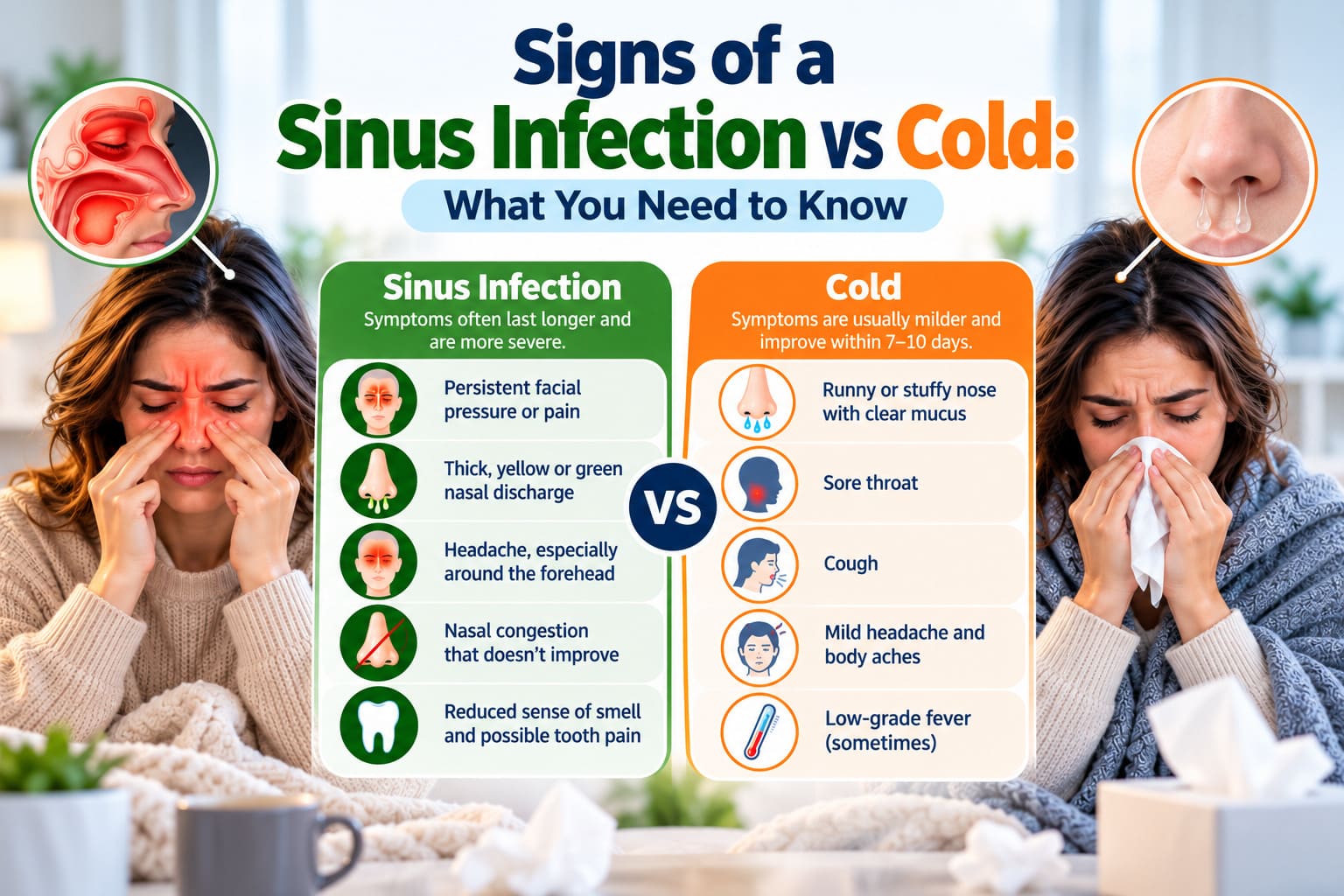
Knowing the difference between a sinus infection vs cold can help you understand your symptoms and decide when medical care may be needed. Both conditions can cause a runny nose, nasal congestion, cough, headache, and fatigue, but sinus infections are more likely to cause facial pressure or pain and symptoms that persist or worsen after initially improving. Most common colds improve on their own, while some sinus infections may require medical evaluation and treatment.
If you are wondering whether you have a cold or sinus infection, the timing, severity, and pattern of your symptoms can provide useful clues. This guide explains the common cold vs sinusitis, key symptoms, causes, treatment options, and when you should see a healthcare provider in Cypress, TX.
Sinus Infection vs Cold: What Is the Difference?
A common cold is a viral infection of the upper respiratory tract. Different respiratory viruses can cause colds, and symptoms commonly include sneezing, runny nose, nasal congestion, sore throat, cough, headache, and mild body aches. Cold symptoms often peak within the first few days and usually improve with time.
A sinus infection, also called sinusitis, occurs when the sinuses become inflamed. Fluid can build up in the sinuses, leading to congestion, nasal drainage, facial pressure or pain, headache, and post-nasal drip. Many sinus infections are caused by viruses and can develop after a cold.
The difference between common cold and sinus infection is not always obvious because the symptoms can overlap. A healthcare provider may consider how long symptoms have lasted, whether they are improving or worsening, and whether you have symptoms such as significant facial pain or pressure.
Common Symptoms of a Cold
A cold usually begins with symptoms affecting the nose and throat. Common symptoms include:
- Runny nose
- Nasal congestion
- Sneezing
- Sore throat
- Cough
- Headache
- Mild body aches
- Low-grade fever in some people
- Tiredness
A runny nose and sneezing are particularly common with colds. Cold symptoms generally peak within two to three days and often improve within about a week, although some symptoms such as cough or congestion can last longer.
An allergy cold can sometimes seem similar to a viral cold. However, seasonal allergies may cause recurring sneezing, runny nose, itchy or watery eyes, and nasal congestion without the typical progression of a viral infection. If allergies are suspected, an allergy doctor can help determine whether further evaluation or allergic rhinitis treatment is appropriate.
Common Symptoms of a Sinus Infection
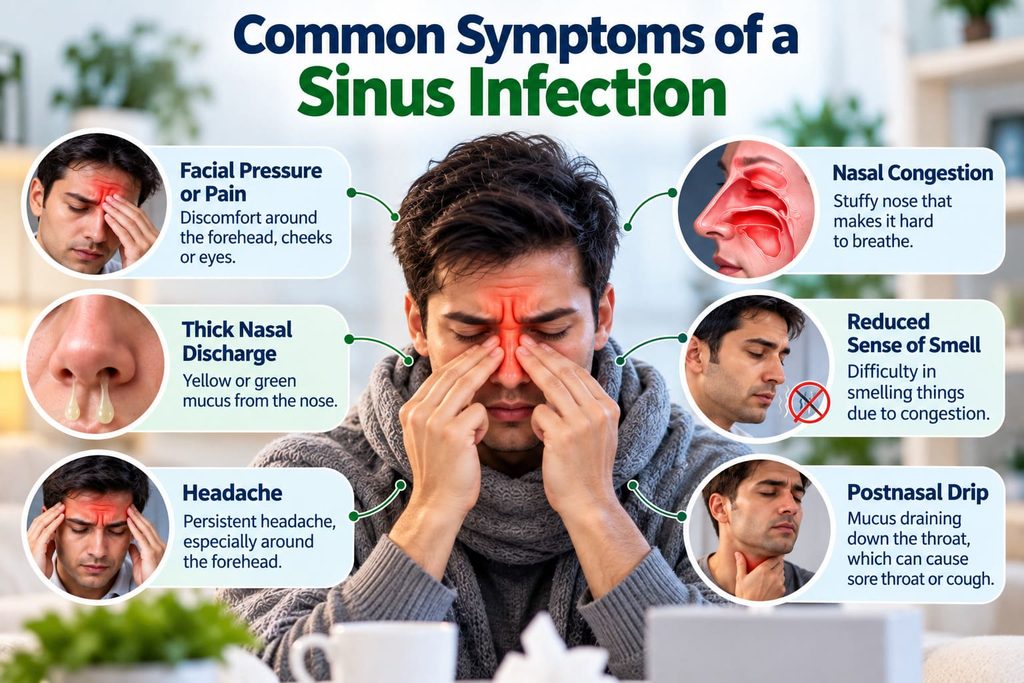
A sinus infection can cause many of the same symptoms as a cold, but certain symptoms may be more noticeable.
Common symptoms include:
- Stuffy or blocked nose
- Runny nose or thick nasal drainage
- Facial pressure or pain
- Sinus headache
- Post-nasal drip
- Cough
- Sore throat
- Bad breath
- Reduced sense of smell
- Fatigue
A sinus headache may feel like pressure or pain around the forehead, cheeks, nose, or eyes. Sinus infections can also make it difficult to breathe comfortably through the nose because of swelling and congestion.
It is important to remember that mucus color alone does not determine whether an infection is bacterial. Thick, yellow, or green mucus can occur during viral respiratory infections as well.
Sinus Infection vs Cold: Key Differences
When comparing a sinus infection vs cold, consider the following differences:
| Feature | Common Cold | Sinus Infection |
| Cause | Usually a respiratory virus | Often viral; some cases are bacterial |
| Runny nose | Common | Common |
| Nasal congestion | Common | Common and may be persistent |
| Sneezing | Common | May occur |
| Facial pressure | Less typical | More common |
| Sinus headache | Less typical | Can occur |
| Symptoms getting worse after improving | Less typical | Can suggest a sinus infection |
| Symptoms lasting more than 10 days without improvement | Less typical | May require medical evaluation |
These differences are useful guidelines, but symptoms alone do not always provide a definite diagnosis. A healthcare provider can evaluate your symptoms and determine whether additional testing or treatment is appropriate.
How Long Does a Cold or Sinus Infection Last?
Most colds improve within about a week, although coughing, nasal congestion, or a runny nose can sometimes continue for 10 to 14 days while gradually improving.
Acute sinusitis can last several weeks, although many cases improve within a week to 10 days. Chronic sinusitis is different because symptoms can continue for at least 12 weeks.
If symptoms continue for more than 10 days without improvement, become severe, or improve and then become worse again, it is a good idea to contact a healthcare provider.
Causes of Sinus Infection and Common Risk Factors
A sinus infection can develop when inflammation or swelling blocks normal drainage from the sinuses. Viruses cause most sinus infections, but some cases can involve bacteria.
A previous cold is one of the common risk factors. Other factors can include:
- Seasonal allergies
- Smoking or secondhand smoke exposure
- Nasal polyps or other structural problems
- A weakened immune system
- Ongoing nasal inflammation
Seasonal allergies can contribute to nasal swelling and congestion, which may affect normal sinus drainage. People with recurring symptoms may need evaluation for allergies or other underlying causes.
Food allergies and food intolerance are different from seasonal allergies. Food allergy testing or food intolerance testing may be appropriate in specific situations, but these tests are not generally used to diagnose an ordinary cold or sinus infection. Similarly, gluten intolerance is a separate digestive or immune-related concern and should not automatically be considered a cause of sinus symptoms.
When Should You See a Doctor?
Many mild colds and sinus infections improve without prescription treatment. However, medical evaluation may be appropriate when symptoms are severe, persistent, recurrent, or getting worse.
Consider contacting a healthcare provider if you have:
- Symptoms lasting more than 10 days without improvement
- Symptoms that improve and then become worse
- Severe facial pain or pressure
- Severe headache
- Fever lasting several days
- Difficulty breathing
- Repeated sinus infections
- Symptoms that interfere with sleep or daily activities
You should seek urgent medical attention for serious symptoms such as difficulty breathing, confusion, significant swelling or redness around the eyes, vision changes, or a severe headache accompanied by other concerning symptoms.
Treatment Options for Cold and Sinus Infection
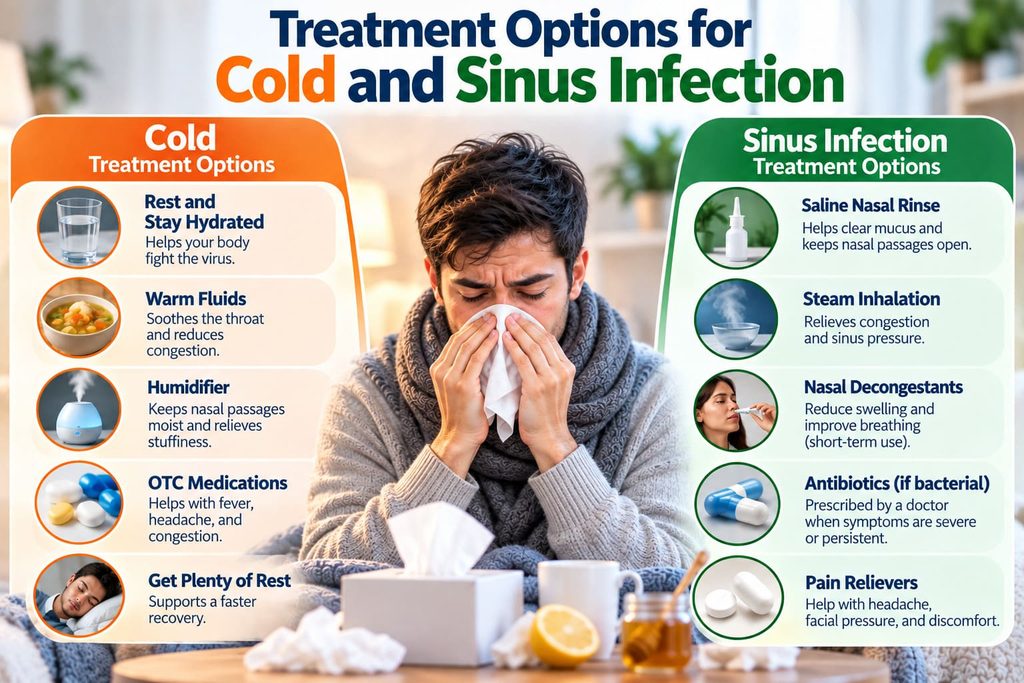
Treatment depends on whether your symptoms are caused by a cold, sinus infection, allergies, or another condition.
Treatment for a Common Cold
There is no specific cure for the common cold. Most people recover with time and supportive care. Rest, adequate fluids, saline nasal spray, humidified air, and appropriate over-the-counter medicines may help relieve symptoms.
Nasal decongestants may provide temporary relief from congestion for some people, but they should be used according to product directions and with consideration of individual health conditions and medications.
Sinus Infection Treatment
Sinus infection treatment depends on the cause and severity. Because many sinus infections are viral, antibiotics are not necessary in many cases. A healthcare provider may recommend supportive care, symptom relief, or watchful waiting when appropriate.
If a bacterial sinus infection is suspected based on the clinical pattern, a healthcare provider may determine whether antibiotics for sinus infection are appropriate. Antibiotics should not be taken without medical guidance because they do not treat viral infections and unnecessary use can cause side effects and contribute to antibiotic resistance.
For allergy-related sinus symptoms, treatment may focus on reducing exposure to triggers and controlling nasal inflammation. Depending on the cause, an allergy evaluation and appropriate allergic rhinitis treatment may be considered.
Can a Cold Turn Into a Sinus Infection?
Yes, a cold can sometimes be followed by a sinus infection. A cold can cause inflammation and swelling inside the nose and sinuses, which may interfere with normal mucus drainage. This can contribute to sinus problems.
However, having congestion or colored mucus after a cold does not automatically mean you have a bacterial sinus infection. Symptoms should be considered as a whole, including how long they have lasted and whether they are improving or getting worse.
About Primary Care of Southern Texas
Primary Care of Southern Texas provides patient-centered primary care in Cypress, TX, and surrounding communities. Our team evaluates a wide range of common illnesses and symptoms and works with patients to understand the possible cause of their concerns.
When you have persistent sinus infection vs cold symptoms, a healthcare provider can review your symptoms, health history, and overall condition to determine the appropriate next steps.
Why Choose Primary Care of Southern Texas for Sinus Infection & Cold Care?
At Primary Care of Southern Texas, we focus on personalized care for patients experiencing cold, sinus, allergy, and other respiratory symptoms. Our team takes time to understand how your symptoms started, how long they have lasted, and whether they are improving or getting worse.
Our approach may include:
- Symptom evaluation: We review symptoms such as nasal congestion, runny nose, facial pressure, headache, cough, sneezing, and fever.
- Medical history review: Your health history, medications, allergies, and previous respiratory problems may help identify possible causes.
- Personalized treatment guidance: Recommendations are based on your symptoms and underlying condition rather than assuming every case requires antibiotics.
- Ongoing care: If symptoms continue or return, follow-up care can help identify whether additional evaluation or treatment is needed.
- Local access to primary care: Our Cypress location serves patients from surrounding communities who need convenient primary care.
Whether you are experiencing a cold or sinus infection, getting the right evaluation can help you understand your symptoms and choose appropriate care.
Get Care for Sinus and Cold Symptoms in Cypress, TX
Persistent nasal congestion, facial pressure, runny nose, coughing, or sinus symptoms can make everyday activities uncomfortable. If you are unsure whether your symptoms are caused by a cold, sinus infection, allergies, or another condition, a primary care evaluation can help clarify the possible cause.
Primary Care of Southern Texas provides primary care services for patients in Cypress and nearby communities. Contact our office to discuss your symptoms and determine whether an appointment is appropriate.
Primary Care of Southern Texas
Cypress Medical Plaza, 27160 US-290 Suite #207
Cypress, TX 77433
Phone: (713) 673-8774
Email: backoffice@stxprimarycare.com
Conclusion
Understanding the difference between a sinus infection vs cold can help you recognize what may be causing your symptoms. Both conditions can cause nasal congestion, runny nose, coughing, and headache, but sinus infections may be more associated with facial pressure, persistent symptoms, or symptoms that worsen after initially improving.
Most colds and many sinus infections improve with time and supportive care. However, symptoms that last more than 10 days without improvement, become severe, or return after improving should be evaluated. If you are experiencing persistent sinus or cold symptoms in Cypress, TX, Primary Care of Southern Texas can help evaluate your concerns and guide you toward appropriate care..
FAQs – Signs of a Sinus Infection vs Cold: What You Need to Know
Q1. Will a sinus infection go away on its own?
Ans. Many sinus infections improve on their own, especially when they are caused by viruses. Antibiotics are not needed for many sinus infections. However, symptoms that are severe, persistent, or worsening should be evaluated by a healthcare provider.
Q2. What are the stages of a sinus infection?
Ans. Sinus symptoms may begin with nasal congestion, runny nose, or other symptoms associated with a viral respiratory infection. Some people then develop continued congestion, facial pressure, or worsening symptoms. The pattern varies from person to person.
Q3. How long do colds last?
Ans. Most colds last less than a week, although some symptoms, particularly coughing or nasal congestion, can last longer. Cold symptoms commonly peak within two to three days and then gradually improve.
Q4. Is lying in bed all day good for a cold infection?
Ans. Rest is helpful when you have a cold because it gives your body time to recover. However, you do not necessarily need to stay in bed all day. Get adequate rest, drink fluids, and gradually return to normal activities as you feel better.
Q5. What drinks help with a cold?
Ans. Drinking enough fluids can help prevent dehydration and keep you comfortable. Water, warm broths, and caffeine-free beverages can be good choices. Warm liquids may also soothe a sore throat. Individual needs vary, so choose fluids that you can tolerate and drink regularly.