
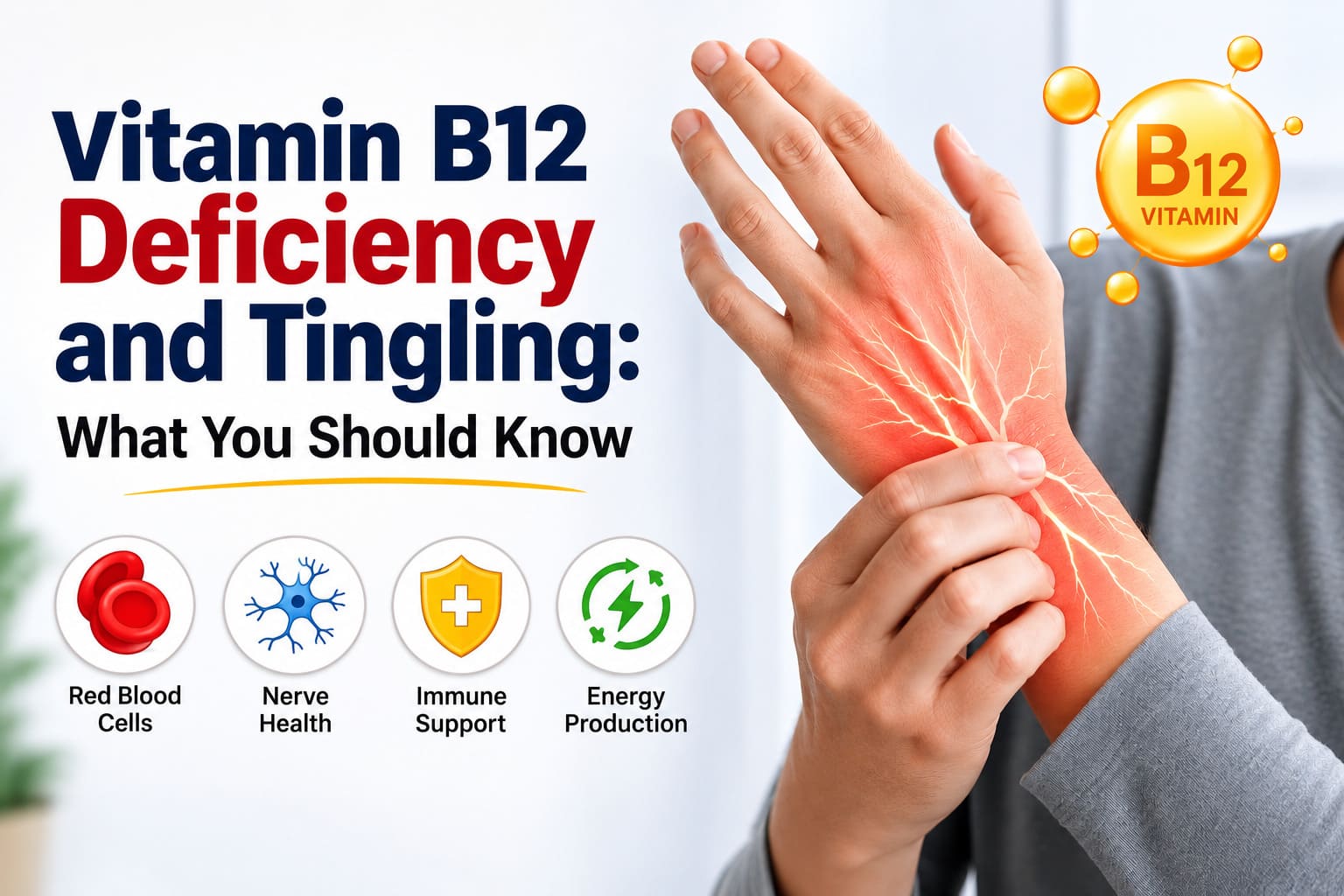
Are you experiencing tingling, numbness, or a pins-and-needles sensation in your hands or feet? Vitamin B12 Deficiency can affect the nervous system and may cause symptoms such as tingling, numbness, weakness, fatigue, and balance problems. Identifying and treating Vitamin B12 Deficiency early is important because prolonged deficiency can lead to nerve-related complications.
Vitamin B12 Deficiency can develop when your body does not get enough vitamin B12 or cannot properly absorb it. Symptoms can develop gradually and may be easy to overlook. This guide explains how B12 deficiency can cause tingling and numbness, common signs and causes, how doctors diagnose it, available treatment options, and when to seek medical care.
What Is Vitamin B12 Deficiency?
Vitamin B12 is an essential nutrient that helps your body produce red blood cells, maintain healthy nerve cells, and make DNA. Vitamin B12 Deficiency occurs when the body does not have enough vitamin B12 to perform these important functions.
A B12 vitamin deficiency can affect different parts of the body. Some people first notice tiredness or weakness, while others develop neurological symptoms such as tingling or numbness.
Common effects of B12 deficiency may include:
- Fatigue or weakness
- Pale skin
- Tingling in the hands or feet
- Numbness
- Muscle weakness
- Balance problems
- Changes in memory or concentration
- A sore or swollen tongue
Without appropriate treatment, prolonged Vitamin B12 Deficiency can affect the nervous system.
Can Vitamin B12 Deficiency Cause Tingling and Numbness?
Vitamin B12 Deficiency can cause tingling in the hands or feet, along with numbness, pins and needles, burning, or reduced sensitivity.
You may experience:
- Tingling in fingers
- Tingling in feet
- Pins and needles in hands
- Pins and needles in feet
- A tingling sensation in feet and hands
- Numbing of fingers
- Tingling in feet at night
- Tingling or numbness in the legs
These symptoms may develop gradually and can sometimes affect both sides of the body. However, tingling has many possible causes, so it should not automatically be attributed to Vitamin B12 Deficiency.
Common Symptoms of Vitamin B12 Deficiency
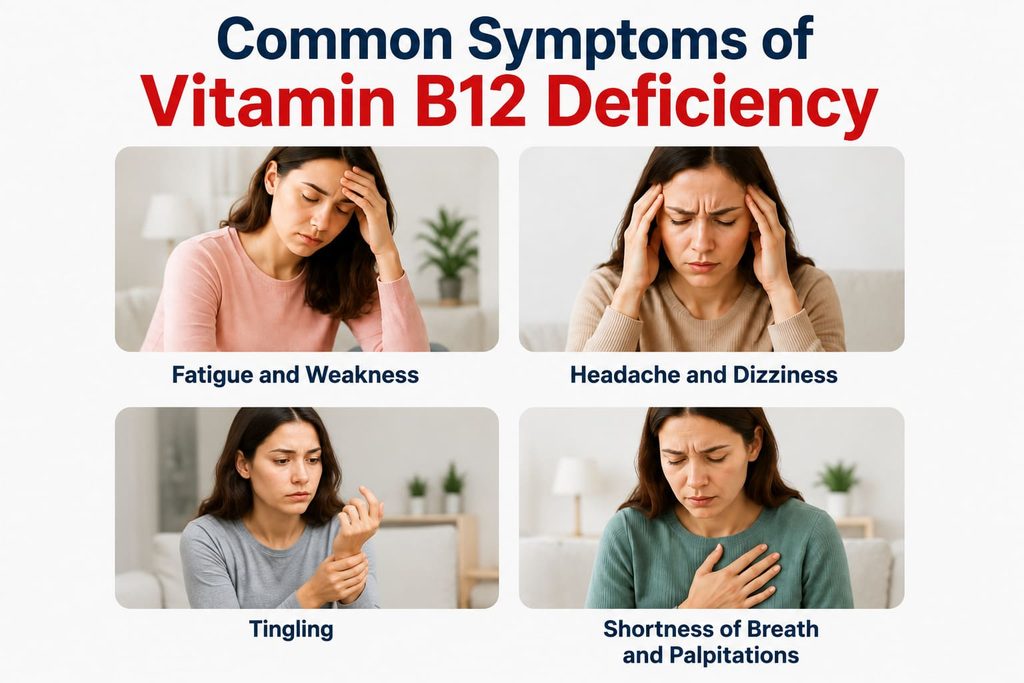
The signs of B12 deficiency can vary depending on how low your vitamin B12 level is and how long the deficiency has been present.
Common signs of low B12 include:
- Persistent tiredness & Weakness
- Tingling or numbness
- Balance difficulties
- Muscle weakness
- Pale or yellowish skin
- Sore tongue
- Changes in appetite
- Difficulty concentrating & Memory changes
Neurological symptoms may occur even when a person does not have significant anemia. For this reason, unexplained tingling or numbness deserves appropriate medical evaluation.
What Causes Vitamin B12 Deficiency?
Vitamin B12 Deficiency can occur because of inadequate intake, problems absorbing the vitamin, or certain medical conditions and medications.
Possible causes include:
- Following a diet low in vitamin B12
- Problems absorbing nutrients from the digestive tract
- Certain stomach or intestinal conditions
- Previous gastrointestinal surgery
- Pernicious anemia
- Some medications that affect B12 absorption
- Increasing age
Vitamin B12 is naturally found mainly in animal-based foods, while some foods are fortified with vitamin B12. People with dietary restrictions or absorption problems may have a higher risk of vitamin B12 depletion.
Your healthcare provider can review your diet, medical history, medications, and symptoms to help determine the possible cause.
How Vitamin B12 Deficiency Affects Nerves
One of the important effects of B12 deficiency is its impact on the nervous system. Vitamin B12 is involved in maintaining healthy nerve cells and supporting normal neurological function.
When deficiency is prolonged, nerve-related symptoms can develop, including tingling, numbness, weakness, balance difficulties, dizziness and nausea, and changes in sensation.
Some people may experience vitamin B12 deficiency and numbness in their hands or feet, while others may notice symptoms in their legs or other areas.
Although Vitamin B12 Deficiency can cause these symptoms, other conditions can also lead to tingling. For example, diabetes, certain medications, nerve compression, circulation problems, and other neurological conditions may produce similar sensations.
How Is Vitamin B12 Deficiency Diagnosed?
A healthcare provider may evaluate your symptoms, medical history, diet, medications, and risk factors when assessing possible Vitamin B12 Deficiency.
A vitamin B12 deficiency blood test is commonly used to measure vitamin B12 levels. Depending on your symptoms and test results, your provider may recommend additional blood tests to better understand the cause of your symptoms.
Your evaluation may include:
- Review of symptoms
- Medical and dietary history
- Physical examination
- Vitamin B12 blood testing
- Additional laboratory tests when appropriate
It is important to interpret B12 results in the context of your symptoms and other laboratory findings. Both low B12 and, in some situations, unexpectedly high levels of B12 in blood may require discussion with a healthcare professional.
Vitamin B12 Deficiency Treatment Options
Treatment for Vitamin B12 Deficiency depends on the underlying cause and severity of the deficiency. Your healthcare provider may recommend vitamin B12 supplements, dietary changes, or other treatment based on your individual situation.
Treatment may involve:
- Oral vitamin B12 supplements
- Vitamin B12 injections when appropriate
- Increasing dietary sources of vitamin B12
- Treating an underlying absorption problem
- Monitoring B12 levels and symptoms
If a deficiency is caused by an underlying medical condition, simply changing your diet may not be enough. Your provider can determine the most appropriate treatment and follow-up plan.
About Primary Care of Southern Texas
At Primary Care of Southern Texas, our team provides patient-focused primary care designed to address a wide range of health concerns. We take time to understand your symptoms, medical history, lifestyle, and individual healthcare needs.
If you are experiencing unexplained tingling, numbness, fatigue, or other possible signs of B12 deficiency, our team can help evaluate your concerns and determine whether further testing may be appropriate.
How Primary Care Can Help With Vitamin B12 Deficiency

Primary care can play an important role in identifying and managing Vitamin B12 Deficiency. Your provider can evaluate symptoms, review potential risk factors, and order appropriate laboratory testing when needed.
Primary care may help with:
- Evaluating tingling and numbness
- Reviewing dietary and medical history
- Ordering vitamin B12 testing
- Identifying possible causes of deficiency
- Recommending appropriate treatment
- Monitoring symptoms and laboratory results
- Addressing underlying health concerns
If you have persistent tingling in feet, tingling in fingers, or other unexplained neurological symptoms, discussing them with a healthcare provider can help determine the underlying cause.
Why Choose Primary Care of Southern Texas?
At Primary Care of Southern Texas, we understand that symptoms such as tingling and numbness can have many possible causes. Our team focuses on evaluating your concerns carefully rather than assuming that every symptom is caused by Vitamin B12 Deficiency.
Our patient-centered approach includes:
- Personalized Evaluation: We assess your symptoms, concerns, and overall health to understand what may be causing your symptoms.
- Review of Your Health History: We review your medical conditions, medications, diet, and other health factors that may contribute to Vitamin B12 Deficiency.
- Appropriate Laboratory Testing: When needed, we may recommend blood tests to check vitamin B12 levels and identify possible nutritional deficiencies.
- Clear Explanations of Results: We explain your test results in simple language and discuss what they may mean for your health.
- Individualized Treatment Recommendations: Based on your results and health needs, we recommend an appropriate treatment or management approach.
- Ongoing Monitoring When Needed: Follow-up visits and testing may be recommended to monitor your B12 levels, symptoms, and response to treatment.
Our goal is to help you understand your symptoms and receive appropriate care based on your individual health needs.We focus on identifying potential causes and providing clear, practical guidance. We also support you with follow-up care when needed to help manage your health over time.
When Should You See a Doctor for Tingling or Numbness?
Occasional tingling may have a simple cause, such as pressure on a nerve. However, persistent or recurring symptoms should be evaluated, particularly when they occur with other possible signs of B12 deficiency.
Consider talking with a healthcare provider if you experience:
- Persistent tingling or numbness
- Repeated pins and needles in your hands or feet
- Unexplained weakness
- Balance problems
- Increasing difficulty walking
- Fatigue along with neurological symptoms
- Symptoms that are gradually getting worse
Sudden tingling or numbness, especially on one side of the body, or symptoms accompanied by facial drooping, trouble speaking, severe weakness, chest pain, or difficulty breathing can indicate a medical emergency and require immediate medical attention.
Schedule Your B12 Evaluation at Primary Care of Southern Texas
If you are experiencing persistent tingling, numbness, fatigue, or other possible symptoms of Vitamin B12 Deficiency, consider discussing your concerns with a primary care provider.
At Primary Care of Southern Texas, our team can evaluate your symptoms, discuss possible causes, and determine whether a vitamin B12 deficiency blood test or other evaluation may be appropriate.
Contact Information
Nexus Specialty Clinic
North Cypress Medical Plaza II
21212 Northwest Freeway, Suite 265
Cypress, TX 77429
Contact: (281) 653-9123
Email: backoffice@stxprimarycare.com
Conclusion
Vitamin B12 Deficiency can affect the nervous system and may cause tingling, numbness, weakness, and other neurological symptoms. Recognizing these symptoms and identifying the underlying cause can help support timely treatment.
If you experience persistent tingling in feet, tingling in fingers, or other unexplained sensory changes, do not assume that B12 deficiency is the only possible cause. A primary care evaluation can help determine what may be contributing to your symptoms and whether testing or treatment is needed.
FAQs – Vitamin B12 Deficiency and Tingling
Q1.What does B12 deficiency tingling feel like?
Ans. Tingling from Vitamin B12 Deficiency may feel like pins and needles, burning, numbness, or reduced sensation, commonly affecting the hands, feet, legs, or other areas.
Q2.Can tingling from B12 deficiency be reversed?
Ans. Tingling may improve when Vitamin B12 Deficiency is identified and treated, particularly when treatment begins early. Long-standing nerve problems may take longer to improve or may not completely resolve.
Q3.What organ is affected by B12 deficiency?
Ans. Vitamin B12 Deficiency can affect the nervous system and blood-forming system. Prolonged deficiency may cause neurological problems as well as anemia.
Q4.Is low B12 a serious issue?
Ans. Low B12 can become a serious health concern if it remains untreated. It may cause anemia and neurological problems, so persistent symptoms should be evaluated by a healthcare professional.
Q5.Can dehydration cause tingling?
Ans. Dehydration can sometimes contribute to symptoms such as weakness, dizziness, or muscle-related sensations, but persistent tingling should not automatically be attributed to dehydration.