
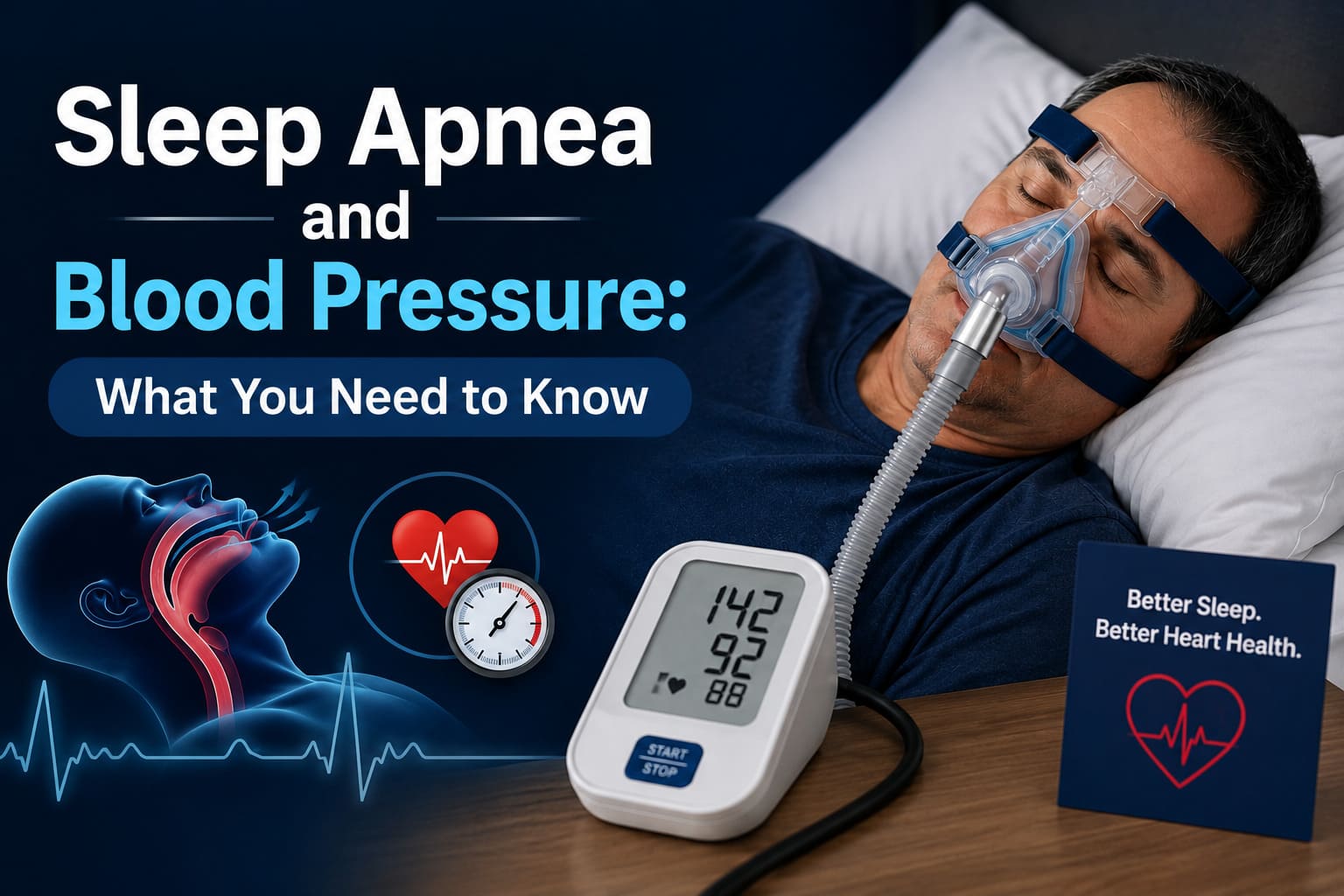
Sleep apnea can affect more than your sleep. Repeated interruptions in breathing during the night can place stress on the body and may be associated with changes in blood pressure. Understanding the connection between sleep apnea and blood pressure can help you recognize possible warning signs and seek appropriate care.
The relationship between sleep apnea and blood pressure is especially important for people who regularly snore, wake up gasping, experience daytime tiredness, or have difficulty staying asleep. With appropriate evaluation and treatment, sleep apnea can be managed, while blood pressure can be monitored as part of your overall health care.
What Is Sleep Apnea?
Sleep apnea is a sleep condition in which breathing repeatedly stops or becomes restricted during sleep. Obstructive sleep apnea (OSA), the most common type, occurs when the upper airway becomes blocked or narrowed during sleep.
These breathing interruptions can last for several seconds and may happen repeatedly throughout the night. When breathing resumes, a person may briefly wake or move into a lighter stage of sleep without fully realizing it.
Common symptoms may include:
- Loud or frequent snoring
- Gasping or choking during sleep
- Breathing problems at night
- Morning headaches
- Daytime sleepiness
- Difficulty concentrating
- Dry mouth after waking
- Problems staying asleep
- Feeling tired despite getting enough time in bed
Some people may not recognize their nighttime symptoms. A bed partner may notice mouth closed snoring, pauses in breathing, or sudden gasping.
What Is the Connection Between Sleep Apnea and Blood Pressure?
The connection between sleep apnea and blood pressure may be related to repeated breathing interruptions during sleep. When breathing stops or becomes restricted, oxygen levels can fall temporarily. The body responds by activating stress-related processes that can increase heart rate and blood pressure.
These changes may occur repeatedly throughout the night. Over time, frequent sleep disruptions may contribute to difficulty maintaining healthy blood pressure levels.
The sleep apnea and blood pressure relationship can vary from person to person. Not everyone with sleep apnea will develop high blood pressure, but people with sleep apnea may have an increased risk of hypertension.
Can Sleep Apnea Cause High Blood Pressure?
Yes, sleep apnea may contribute to high blood pressure, particularly when the condition is untreated. Repeated breathing interruptions can place stress on the cardiovascular system and cause temporary blood pressure spikes during sleep.
The relationship between sleep apnea and blood pressure is not limited to nighttime readings. Some people may continue to have elevated blood pressure during the day.
If you have high blood pressure that is difficult to control, especially when combined with loud snoring or daytime sleepiness, discussing possible sleep apnea with a healthcare provider may be appropriate.
Why Does Sleep Apnea Raise Blood Pressure?
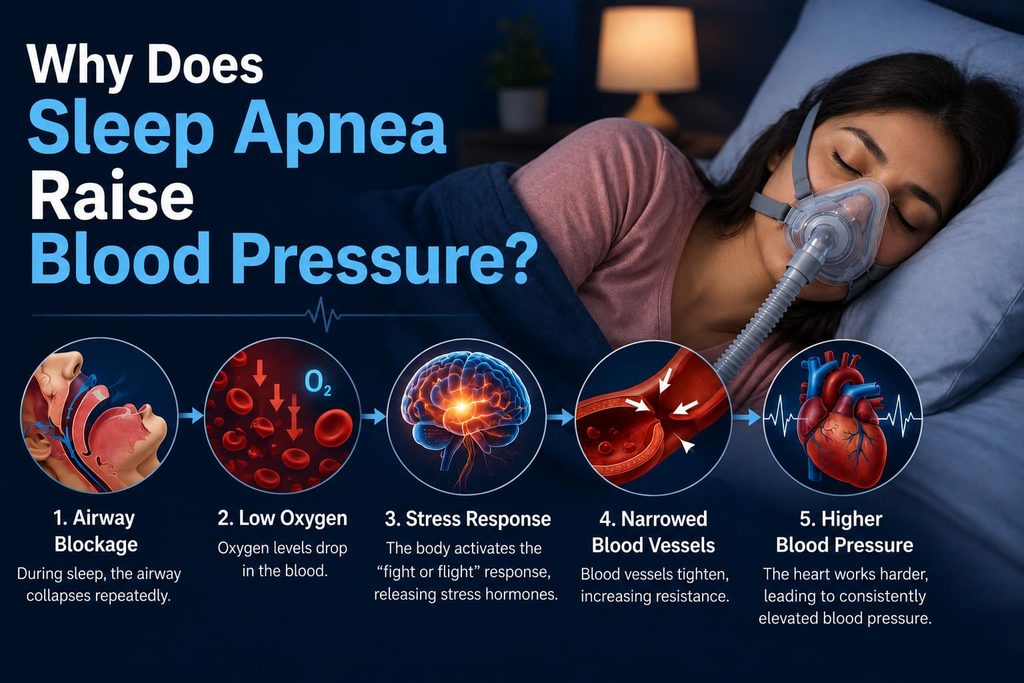
Several factors may contribute to the connection between sleep apnea and hypertension.
- Repeated Drops in Oxygen
When breathing is interrupted, oxygen levels can temporarily decrease. The body responds by working harder to restore normal breathing.
- Increased Stress Response
Breathing interruptions can activate the body’s stress response. This may increase heart rate and cause temporary increases in blood pressure.
- Repeated Sleep Disruptions
Frequent breathing interruptions can prevent restful sleep and affect normal sleep patterns, leading to signs of sleep deprivation and ongoing sleep disruption that may place additional strain on the cardiovascular system.
Changes in Heart and Blood Vessel Function
Repeated nighttime stress may affect how the heart and blood vessels function over time, contributing to cardiovascular risk.
These factors help explain why sleep apnea and blood pressure are often discussed together, particularly in people with untreated or persistent obstructive sleep apnea.
Signs of Sleep Apnea and High Blood Pressure
Sleep apnea and high blood pressure can occur together, but their symptoms are not always obvious. High blood pressure often does not cause noticeable symptoms, while sleep apnea may produce signs during sleep or during the day.
Possible signs of sleep apnea include:
- Loud snoring
- Gasping or choking during sleep
- Breathing pauses noticed by a bed partner
- Daytime fatigue
- Morning headaches
- Difficulty concentrating
- Problems staying asleep
- Waking with a dry mouth
- Frequent nighttime awakenings
People experiencing these symptoms along with elevated blood pressure should discuss their concerns with a healthcare provider.
Some people may also experience difficulty breathing at night or difficulty breathing when lying down. These symptoms can have different causes and should not automatically be attributed to sleep apnea.
How Can Sleep Apnea Affect Your Heart Health?
Untreated sleep apnea can place repeated stress on the cardiovascular system. The combination of breathing interruptions, oxygen changes, increased stress responses, and sleep disruptions may contribute to cardiovascular concerns.
The relationship between sleep apnea and blood pressure is particularly important because high blood pressure is a major risk factor for cardiovascular disease.
People with sleep apnea may also have other health conditions that affect heart health. Regular medical care can help identify and manage these risk factors.
If you have persistent sleep problems, snoring, or nighttime breathing concerns, an evaluation can help determine whether sleep apnea may be contributing to your symptoms.
Can Treating Sleep Apnea Help Lower Blood Pressure?
Treating sleep apnea with appropriate therapy for sleep disorders may help improve blood pressure in some people, although the response can vary.
CPAP therapy is commonly used for obstructive sleep apnea. By helping keep the airway open during sleep, CPAP can reduce breathing interruptions and may support better blood pressure control in some patients.
However, CPAP does not necessarily eliminate high blood pressure or replace blood pressure medication when medication has been prescribed.
The appropriate sleep apnea hypertension treatment depends on the individual’s diagnosis, severity of sleep apnea, blood pressure levels, and overall health.
How to Manage Sleep Apnea and Blood Pressure
Managing sleep apnea and blood pressure often involves addressing both conditions as part of an overall healthcare plan.
1. Follow Your Sleep Apnea Treatment Plan
If you have been diagnosed with sleep apnea, follow the treatment recommended by your healthcare provider. Depending on your condition, treatment may include CPAP, oral appliance therapy, positional therapy, lifestyle changes, or other approaches.
2. Monitor Your Blood Pressure
Regular blood pressure monitoring can help you and your provider understand whether your blood pressure remains within a healthy range. Keep track of your readings and discuss consistently elevated results with your healthcare provider.
3. Maintain Healthy Daily Habits
Regular physical activity, a balanced diet, healthy weight management, and avoiding tobacco can support overall health and may complement treatment for sleep-related conditions.
4. Limit Alcohol Before Bed
Alcohol can affect sleep quality and may worsen breathing problems during sleep for some people. If you have sleep apnea, discuss alcohol use with your healthcare provider.
5. Maintain a Consistent Sleep Routine
Going to bed and waking up at consistent times may support better sleep habits and complement the management of sleep apnea and blood pressure. A regular sleep routine can also help reduce sleep disruptions.
6. Address Persistent Snoring
Snoring can have several causes and does not always mean that someone has sleep apnea. However, frequent loud snoring combined with gasping, breathing pauses, or daytime fatigue may warrant medical evaluation.
There are various solutions for snoring, but the appropriate approach depends on what is causing it.
About Primary Care of Southern Texas
At Primary Care of Southern Texas, patient-focused primary care is designed around understanding each patient’s symptoms, medical history, lifestyle, and individual healthcare needs.
Sleep-related concerns can vary from person to person. Discussing symptoms such as snoring, daytime fatigue, nighttime breathing problems, or elevated blood pressure can help your provider understand your concerns and determine appropriate next steps.
How Primary Care Can Help With Sleep Apnea and Blood Pressure

Primary care can play an important role in identifying symptoms and supporting ongoing management of sleep apnea and blood pressure.
- Personalized evaluation of symptoms: Your provider can review snoring, daytime fatigue, nighttime breathing difficulties, and other symptoms that may suggest a sleep-related condition.
- Review of medical history: Your medical history, medications, existing conditions, and lifestyle factors can provide important context when evaluating issues like elderly sleep problems and blood pressure.
- Blood pressure monitoring: Regular monitoring can help identify consistently elevated readings and determine whether further evaluation or adjustments to your care may be needed.
- Discussion of sleep-related concerns: You can discuss problems such as trouble breathing when lying down, frequent awakenings, daytime tiredness, or difficulty breathing at night with your provider.
- Preventive healthcare: Regular primary care can help monitor cardiovascular risk factors and support healthy habits that complement sleep apnea and blood pressure management.
- Guidance about appropriate next steps: If your symptoms suggest sleep apnea, your provider can discuss whether additional evaluation, such as a sleep study or specialist referral, may be appropriate.
Why Choose Primary Care of Southern Texas for Sleep Apnea and Blood Pressure Care in Cypress, TX?
Managing sleep apnea and blood pressure can require ongoing attention to symptoms, treatment, and overall health. Primary Care of Southern Texas takes a patient-focused approach to understanding individual concerns and providing clear guidance about available care options.
The practice can support patients with:
1.Personalized evaluation: Your provider can assess symptoms such as snoring, daytime fatigue, nighttime breathing difficulties, and elevated blood pressure to better understand your individual health concerns.
2.Preventive healthcare: Regular checkups can help monitor overall health, identify potential risk factors, and support healthy habits that may benefit sleep and cardiovascular health.
3.Review of medical history: Your provider can review your existing health conditions, medications, lifestyle factors, and previous treatments to develop a more informed approach to your care.
4.Blood pressure monitoring: Regular blood pressure checks can help identify consistently high readings and allow your provider to determine whether additional evaluation or management may be needed.
5.Discussion of sleep-related symptoms: You can discuss concerns such as loud snoring, frequent nighttime awakenings, gasping during sleep, daytime tiredness, or other sleep-related symptoms with your provider.
6.Ongoing primary care: Regular follow-up allows your provider to monitor changes in your symptoms, blood pressure, and overall health while helping you stay on track with recommended care.
7.Guidance about appropriate next steps: If your symptoms suggest sleep apnea or another sleep-related condition, your provider can discuss appropriate next steps, which may include further evaluation, a sleep study, or referral to a specialist when needed.
If you are experiencing persistent sleep problems, snoring, or concerns about your blood pressure, discussing your symptoms with a healthcare provider is important, especially since sleep apnea and high blood pressure can be a dangerous pair.
Schedule Your Sleep Apnea and Blood Pressure Evaluation in Cypress, TX
If you are experiencing snoring, daytime fatigue, nighttime breathing problems, or consistently elevated blood pressure, professional evaluation can help you better understand the possible causes.
At Primary Care of Southern Texas, our team can discuss your symptoms, review your health history, and help determine appropriate next steps for your care.
Primary Care of Southern Texas
Address: Cypress Medical Plaza, 27160 US-290, Suite #207, Cypress, TX 77433
Phone: +1 713-673-8774
Email: backoffice@stxprimarycare.com
Conclusion
Understanding the relationship between sleep apnea and blood pressure can help you recognize potential health concerns and seek appropriate care. Repeated breathing interruptions during sleep may cause temporary blood pressure changes and place additional stress on the cardiovascular system.
If you regularly experience loud snoring, nighttime breathing problems, daytime fatigue, or high blood pressure that remains difficult to control, talk with a healthcare provider about sleep apnea and blood pressure medication. With appropriate evaluation and individualized treatment, both conditions can be monitored as part of your overall health care.
FAQs – Sleep Apnea and Blood Pressure: What You Need to Know
Q1. What are the potential side effects of sleep apnea?
Ans. Untreated sleep apnea may contribute to daytime fatigue, difficulty concentrating, morning headaches, sleep disruptions, and increased cardiovascular risks, including high blood pressure.
Q2. Is there a connection between high blood pressure and sleep?
Ans. Yes. Poor-quality sleep and sleep conditions such as obstructive sleep apnea may affect blood pressure. Repeated breathing interruptions can cause temporary increases in blood pressure during the night.
Q3. Can CPAP lower blood pressure?
Ans. CPAP may help lower blood pressure in some people with obstructive sleep apnea, and may help manage sleep apnea and blood pressure spikes. However, it does not necessarily replace prescribed blood pressure medication.
Q4. What organ is affected by sleep apnea?
Ans. Sleep apnea primarily affects breathing during sleep but can also place stress on the heart and cardiovascular system. Repeated oxygen changes and sleep disruptions may affect overall health.
Q5. Does CPAP cure sleep apnea?
Ans. CPAP generally manages obstructive sleep apnea rather than permanently curing it. It helps keep the airway open during sleep and works best when used consistently according to your healthcare provider’s recommendations.