

High blood pressure can be difficult to control, even when you take medication and make healthy lifestyle changes. In some cases, an underlying medical condition or medication may be responsible. This is known as secondary hypertension and finding the cause can help guide more effective treatment.
If you are seeking Secondary Hypertension Treatment in Cypress, TX, understanding its causes and symptoms is an important first step. Kidney disease, hormonal disorders, sleep apnea and certain medications can contribute to secondary high blood pressure, which may improve when the underlying cause is treated.
STX Primary Care offers personalized primary care and blood pressure management, helping patients explore appropriate testing, treatment options and specialist referrals when needed.
What Is Secondary Hypertension?
Secondary hypertension is high blood pressure caused by an identifiable medical condition or substance, such as kidney disease, hormonal disorders, sleep apnea or certain medicines. Secondary hypertension treatment in Cypress, TX starts with confirming high blood pressure, identifying possible causes and developing a treatment plan that addresses both the underlying condition and blood pressure levels.
Key Takeaways
- Secondary arterial hypertension results from an identifiable underlying cause, unlike most cases of primary hypertension.
- Kidney disease, primary aldosteronism, sleep apnea and some medications are important causes to consider.
- Secondary hypertension symptoms may be absent, so blood pressure checks and appropriate medical evaluations matter.
- Sudden-onset, difficult-to-control or unusually early hypertension may warrant further investigation.
- Pulmonary hypertension affects blood vessels in the lungs and is different from ordinary systemic high blood pressure.
- A primary care clinician can assess your blood pressure and help coordinate the next steps.
What Is Secondary Arterial Hypertension?
Secondary arterial hypertension occurs when an underlying condition or substance raises blood pressure. It may be suspected when blood pressure rises suddenly or becomes difficult to control. The term secondary blood pressure informally describes this elevation but is not a separate medical diagnosis.
Unlike secondary hypertension, primary hypertension usually develops from several factors. The causes of primary hypertension include genetics, ageing, excess sodium intake, excess weight and physical inactivity. Secondary hypertension has an identifiable cause that may be treatable.
What Are the Common Causes of Secondary Hypertension?
The common causes of secondary hypertension include kidney disorders, hormonal conditions, obstructive sleep apnea and medications that raise blood pressure. Identifying the likely cause helps clinicians select the right tests and treatment.
1. Kidney Disease and Secondary Hypertension
Secondary hypertension kidney disease occurs when impaired kidney function affects fluid and salt balance, raising blood pressure. Common causes include chronic kidney disease, kidney inflammation and narrowed kidney arteries. Since high blood pressure can also damage the kidneys, a clinician may recommend blood tests, urine tests or imaging to identify the cause and guide treatment.
2. Endocrine Causes of Secondary Hypertension
The endocrine causes of secondary hypertension involve hormone-producing glands that influence blood pressure, fluid balance or the body’s stress response. Examples include:
- Primary aldosteronism: Excess aldosterone can cause the body to retain sodium and lose potassium.
- Thyroid disorders: An overactive or underactive thyroid may affect heart rate and blood pressure.
- Cushing syndrome: Excess cortisol can contribute to hypertension.
- Pheochromocytoma: A rare tumour that may release hormones capable of causing sudden blood pressure spikes.
Not everyone with hypertension needs extensive hormone testing. Your clinician may recommend targeted tests when your symptoms, examination, laboratory results or blood pressure pattern suggest a hormonal cause.
3. Sleep Apnea
Obstructive sleep apnea causes repeated breathing interruptions during sleep, which can contribute to high blood pressure. Loud snoring, daytime sleepiness and difficult-to-control blood pressure may indicate sleep apnea. Treating this condition can help improve blood pressure management.
What Is the Most Common Cause of Secondary Hypertension?
There is no single cause that is universally the most common in every patient group. Kidney disease has long been recognised as an important cause, while primary aldosteronism and obstructive sleep apnea are also significant and sometimes underdiagnosed causes of secondary high blood pressure.
The cause depends on age, symptoms, medical history and treatment response. Resistant hypertension may warrant screening for primary aldosteronism, even with normal potassium levels.
What Are the Symptoms of Secondary Hypertension?
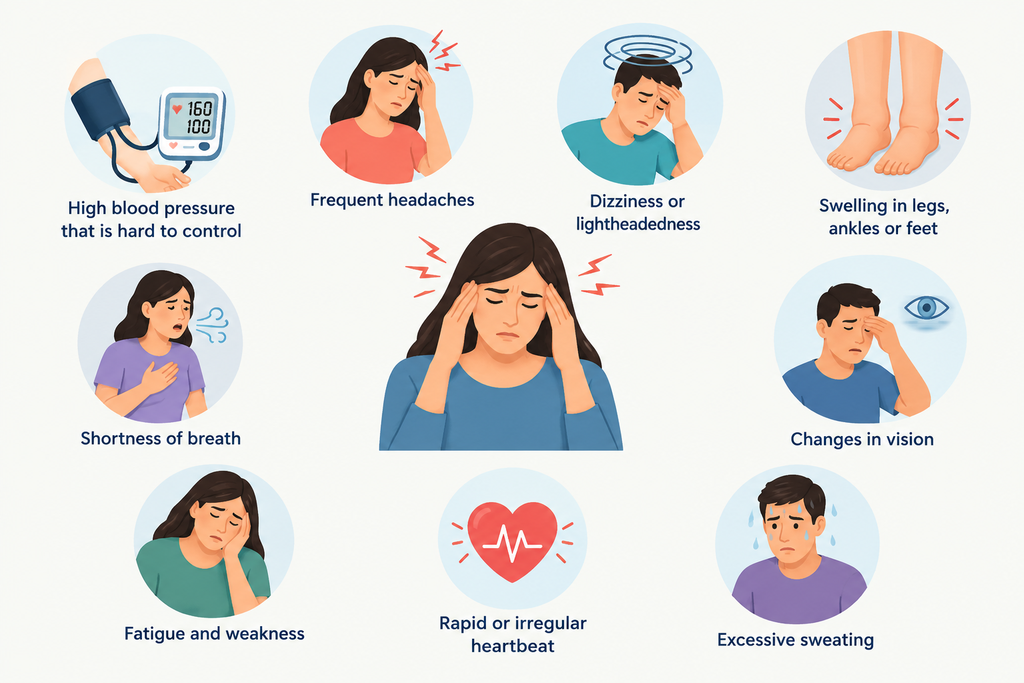
Secondary hypertension symptoms are not always obvious. Many people have no symptoms, even when their blood pressure is high. The condition may first be identified during a routine check-up or while investigating another health concern.
Possible clues depend on the underlying cause and may include:
- Muscle weakness or cramps, which may occur with low potassium.
- Excessive sweating, palpitations or episodes of sudden blood pressure elevation.
- Loud snoring, breathing pauses during sleep or daytime fatigue.
- Changes in urination or abnormal kidney test results.
- Blood pressure that begins suddenly or remains high despite treatment.
These signs do not confirm secondary arterial hypertension on their own. A proper assessment is needed to establish the diagnosis and rule out other explanations.
Is Secondary Pulmonary Arterial Hypertension the Same Condition?
Secondary pulmonary arterial hypertension differs from systemic hypertension, which affects arteries throughout the body. Secondary causes of pulmonary hypertension include heart disease, chronic lung disease, low oxygen levels and blood clots in the lungs. Diagnosis may require specialist tests. Seek medical care for unexplained breathlessness, fainting or chest discomfort.
How Is Secondary Hypertension Diagnosed?
Secondary hypertension treatment in Cypress, TX begins with confirming the blood pressure pattern and assessing whether an underlying cause is likely. Testing is based on your symptoms, history, examination and initial results.
Medical History and Blood Pressure Checks
Your clinician may review previous readings, family history, current medicines, sleep patterns and other health conditions. Home readings or ambulatory blood pressure monitoring may help confirm whether blood pressure stays high outside the clinic.
Blood and Urine Tests
Depending on the suspected cause, tests may assess kidney function, electrolytes, urine abnormalities, thyroid function or hormone levels. Not every patient requires every test.
Imaging and Specialist Evaluation
Kidney imaging, assessment of renal arteries, sleep studies or endocrine testing may be appropriate in selected cases. If the results suggest a condition that needs specialist care, your primary care clinician can help coordinate further evaluation.
How Is Secondary Hypertension Treated?
Secondary hypertension treatment depends on the condition causing the elevated blood pressure. The goal is to address that cause when possible and reduce the risk of complications from persistently high blood pressure.
Treatment may include:
- Treating kidney or hormonal conditions with appropriate medical care.
- Reviewing medicines that may contribute to elevated blood pressure.
- Using prescribed blood pressure medication when needed.
- Managing sleep apnea or other contributing conditions.
- Reducing excess sodium, staying physically active and following a balanced eating plan.
- Monitoring blood pressure and attending follow-up appointments.
Treating the underlying cause may improve blood pressure, but some patients still need long-term medication and monitoring. Never change or stop medication without medical advice.
When Should You Seek Medical Care in Cypress, TX?
Arrange a medical appointment if your blood pressure repeatedly remains high, becomes difficult to control, rises suddenly or develops at an unusually young age. These patterns may warrant an evaluation for reasons for secondary hypertension, especially when other symptoms or medical conditions are present.
If you have a blood pressure reading above 180/120 mm Hg, wait at least one minute and check it again. If it remains that high without symptoms, contact a healthcare professional immediately for urgent guidance. If it is accompanied by chest pain, shortness of breath, weakness, numbness, vision changes or difficulty speaking, call 911.
Get Personalized Blood Pressure Care at STX Primary Care
Finding the cause of high blood pressure can help guide the next steps in care. STX Primary Care provides primary care and chronic disease management for patients in Cypress and surrounding communities, including Hockley, Waller, Tomball, Magnolia and Katy.
If you are concerned about secondary hypertension symptoms or blood pressure that remains high despite treatment, schedule an evaluation to discuss your readings, medical history and possible next steps. Visit the hypertension treatment page or contact the clinic at (713) 673-8774 to ask about an appointment.
Primary Care of Southern Texas
Cypress Medical Plaza, 27160 US-290 Suite #207
Cypress, TX 77433
Phone: (713) 673-8774
Email: backoffice@stxprimarycare.com
Conclusion
Secondary hypertension can sometimes be traced to an underlying condition, making careful evaluation an important part of treatment. Kidney disease, hormonal disorders, sleep apnea and certain medicines are among the causes clinicians may consider. Recognising secondary hypertension symptoms and investigating unusual blood pressure patterns can help guide appropriate care.
For Secondary Hypertension Treatment in Cypress, TX, contact STX Primary Care to discuss your blood pressure concerns and arrange an evaluation. A personalised plan can help identify the next steps for managing your blood pressure and protecting your long-term health.
Frequently Asked Questions About Secondary Hypertension
1. What is secondary hypertension?
Secondary hypertension is high blood pressure caused by an identifiable condition or substance, such as kidney disease, hormonal disorders, sleep apnea or certain medications.
2. What are the common causes of secondary hypertension?
Common causes include kidney disease, primary aldosteronism, obstructive sleep apnea, renal artery disorders and medicines that raise blood pressure.
3. What is the most common cause of secondary hypertension?
There is no single universally most common cause across all populations. Kidney disease, primary aldosteronism and sleep apnea are important causes clinicians may investigate.
4. Can kidney disease cause secondary hypertension?
Yes. Kidney disease can affect fluid and salt balance and contribute to high blood pressure. Hypertension can also worsen kidney damage.
5. What are the main secondary hypertension symptoms?
Many people have no symptoms. Clues may include sudden-onset or difficult-to-control blood pressure, muscle weakness, palpitations or signs of an underlying condition.