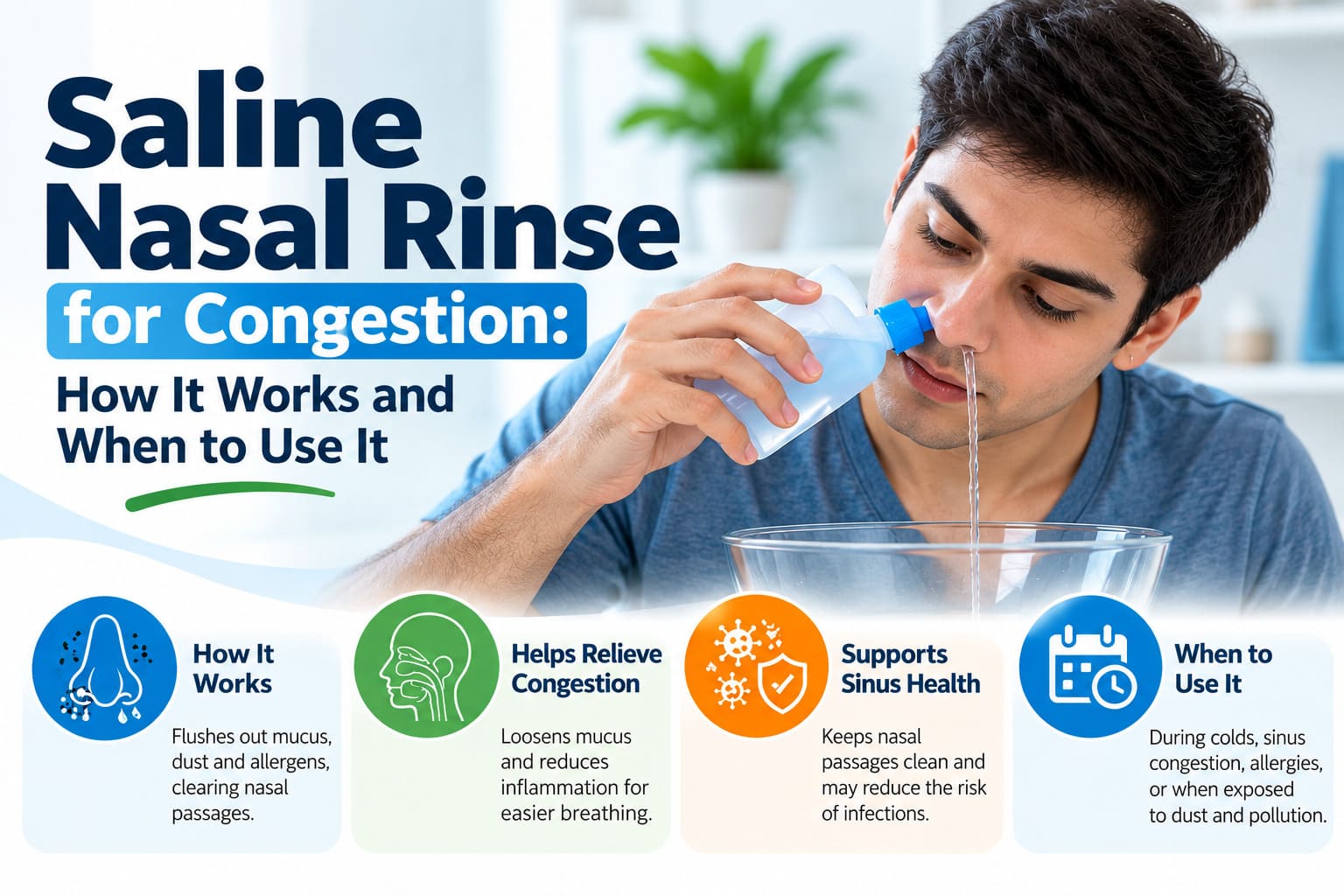
A Saline Nasal Rinse is a simple method of flushing the nasal passages with a salt-water solution to help remove mucus, allergens, dust, and other irritants. It may provide temporary relief from nasal congestion, stuffiness, and irritation associated with colds, allergies, and some sinus problems.
A Saline Nasal Rinse can be performed using a sinus rinse bottle, nasal rinse kit, or another appropriate nasal irrigation device. Using the right saline solution and safe water, such as distilled water for nasal rinse, is important to reduce the risk of infection. This guide explains how a nasal rinse works, when to use one, how to perform it safely at home, and when congestion may require medical care.
What Is a Saline Nasal Rinse and What Is It Used For?
A Saline Nasal Rinse is a form of nasal irrigation that uses a salt-water solution to rinse the inside of the nose. The solution passes through the nasal passages and helps wash away excess mucus, allergens, dust, and other substances that may contribute to congestion or irritation.
A nasal rinse can be performed with a sinus rinse kit, sinus rinse bottle, nasal rinse kit, or another device designed specifically for nasal irrigation. Some products come with prepared saline packets that are mixed with water according to the manufacturer’s instructions.
The goal of a saline rinse is not to cure every cause of congestion but to help clean and moisturize the nasal passages. It may be useful as part of supportive care for certain nasal and sinus symptoms.
Does Saline Nasal Rinse Help With Congestion?
Yes, a Saline Nasal Rinse may help relieve nasal congestion by flushing mucus and irritants from the nasal passages. Rinsing can also help moisturize the nose when the nasal passages feel dry or irritated.
A saline sinus rinse may be particularly helpful when congestion is related to allergies, a common cold, or sinus symptoms. However, the amount of relief can vary depending on the underlying cause and severity of the congestion.
If congestion is persistent, severe, or accompanied by other concerning symptoms, a nasal rinse should not replace an evaluation by a healthcare professional.
How Saline Nasal Rinse Works
When you use a Saline Nasal Rinse, the saline solution flows through the nasal passages and helps loosen and remove mucus and unwanted particles. This can help clear the nasal passages and make breathing through the nose more comfortable.
A saline nasal flush may also help remove allergens such as pollen and dust from the surface of the nasal passages. This can be useful for people who experience nasal symptoms related to seasonal or environmental allergies.
The rinse does not eliminate the underlying cause of every nasal problem. Instead, it is generally used as a supportive measure to clean the nose and reduce congestion or irritation.
When to Use a Saline Nasal Rinse
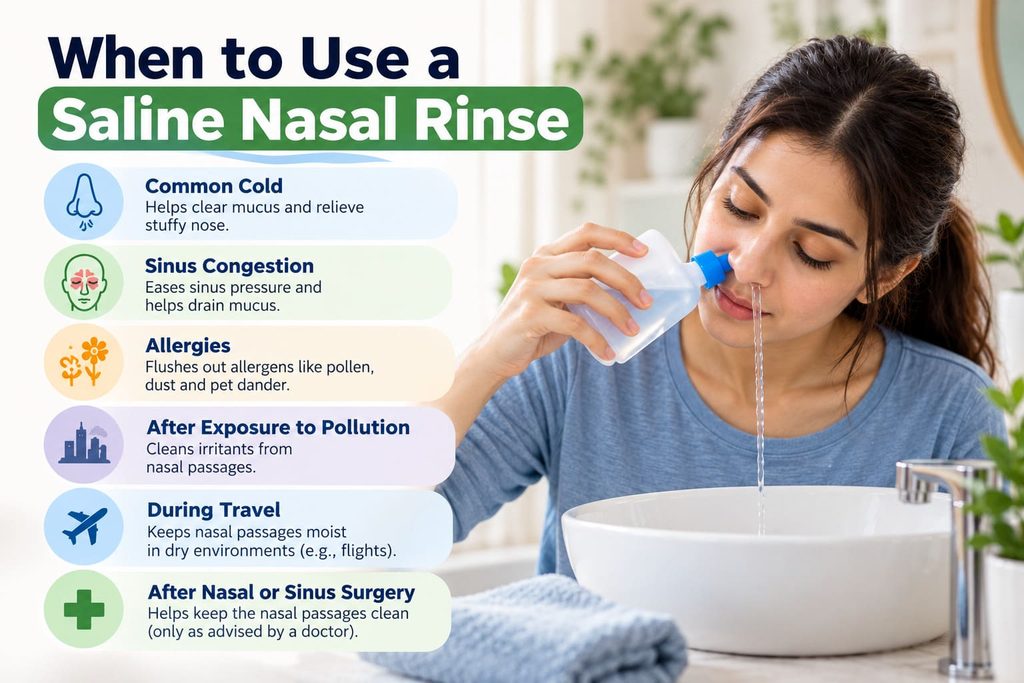
A Saline Nasal Rinse may be useful when you have nasal congestion, excess mucus, or irritation. Common situations where nasal irrigation may provide supportive relief include:
- Nasal congestion: A rinse may help loosen mucus and clear blocked nasal passages.
- Seasonal allergies: Rinsing may help remove pollen and other allergens from the nose.
- Common cold: A nasal rinse may help clear excess mucus and improve nasal comfort.
- Sinus symptoms: A sinus rinse may help wash away mucus and irritants from the nasal passages.
- Dry or irritated nose: Saline can help moisturize the nasal passages.
- Environmental exposure: Rinsing may help remove dust and other airborne particles from the nose.
Your symptoms and their underlying cause should determine whether nasal irrigation is appropriate for you.
How to Do a Saline Nasal Rinse at Home
Using a Saline Nasal Rinse at home can be straightforward when you follow the instructions for your specific device. A typical process involves preparing the saline solution, positioning yourself correctly, and gently allowing the solution to pass through one nostril and out the other.
Step 1: Choose the Right Device
You can use a saline nasal rinse bottle, nasal rinse kit, or another device specifically designed for nasal irrigation. Follow the manufacturer’s instructions for preparing and using the product.
Step 2: Prepare the Saline Solution
Use a commercially prepared saline packet or prepare a saline solution according to reliable medical instructions. The solution should contain the appropriate amount of salt and should not be made excessively concentrated.
Step 3: Use Safe Water
Water safety is extremely important. Use distilled water for nasal rinse, sterile water, or water that has been appropriately boiled and cooled according to medical guidance.
Do not use untreated tap water directly for nasal irrigation because it can contain microorganisms that may be harmful if they enter the nasal passages.
Step 4: Rinse Gently
Place the tip of the sinus rinse bottle or nasal irrigation device against the nostril without forcing it. Gently squeeze or use the device according to its instructions, allowing the saline solution to flow through the nasal passages.
Step 5: Clean the Device
After use, clean and dry your nasal rinse bottle, nasal cleanse bottle, or other irrigation device according to the manufacturer’s instructions. Keeping the device clean is important for safe repeated use.
Using a Saline Nasal Rinse at home can help clear mucus, allergens, and other irritants from your nasal passages. Always use safe water, the correct saline solution, and a clean device to reduce the risk of irritation or sinus infection or cold.
How Often Should You Use a Saline Nasal Rinse?
How often you should use a Saline Nasal Rinse depends on your symptoms, the reason for using it, and the instructions for your specific product. Some people may use nasal irrigation once or more during periods of congestion or allergy symptoms, while others may use it less frequently.
Daily use may be appropriate for some people, but it is not necessary for everyone. If frequent rinsing causes irritation, dryness, nosebleeds, or discomfort, stop and discuss the symptoms with a healthcare professional.
If you are unsure whether a saline nasal rinse daily routine is appropriate for you, your healthcare provider can help you determine a suitable approach based on your symptoms.
About Primary Care of Southern Texas
Primary Care of Southern Texas provides personalized primary care services for patients in Cypress, TX, and surrounding communities. Our team evaluates a wide range of health concerns and focuses on understanding each patient’s symptoms, medical history, and individual needs.
If you have ongoing nasal congestion, sinus symptoms, allergies, or other respiratory concerns, a healthcare provider can help determine the possible cause and recommend appropriate treatment or supportive care.
Saline Nasal Rinse for Allergies and Sinus Problems
A Saline Nasal Rinse can be used as supportive care for some people with allergies or sinus symptoms. Rinsing may help remove mucus and allergens from the nasal passages and can make the nose feel cleaner and less congested.
For people with seasonal allergies, saline nasal washes may help remove pollen and other environmental irritants that accumulate in the nose. However, nasal irrigation does not replace allergy treatment when medications or other medical care are needed.
People with recurring sinus problems may also use a saline solution nose rinse as part of their overall symptom-management routine. Persistent or recurrent sinus symptoms should be evaluated to determine whether allergies, infection, structural problems, or another condition may be contributing.
Saline Nasal Rinse Before or After Nasal Spray
If you use a nasal medication spray, your healthcare provider may recommend using a nasal rinse with saline solution before the medication. Clearing excess mucus can help prepare the nasal passages for some nasal medications.
However, the correct order can depend on the specific nasal spray and your treatment plan. Follow the instructions provided with your medication or ask your healthcare provider or pharmacist if you are unsure whether to use your saline nasal rinse before or after a nasal spray.
Is Saline Nasal Rinse Safe?
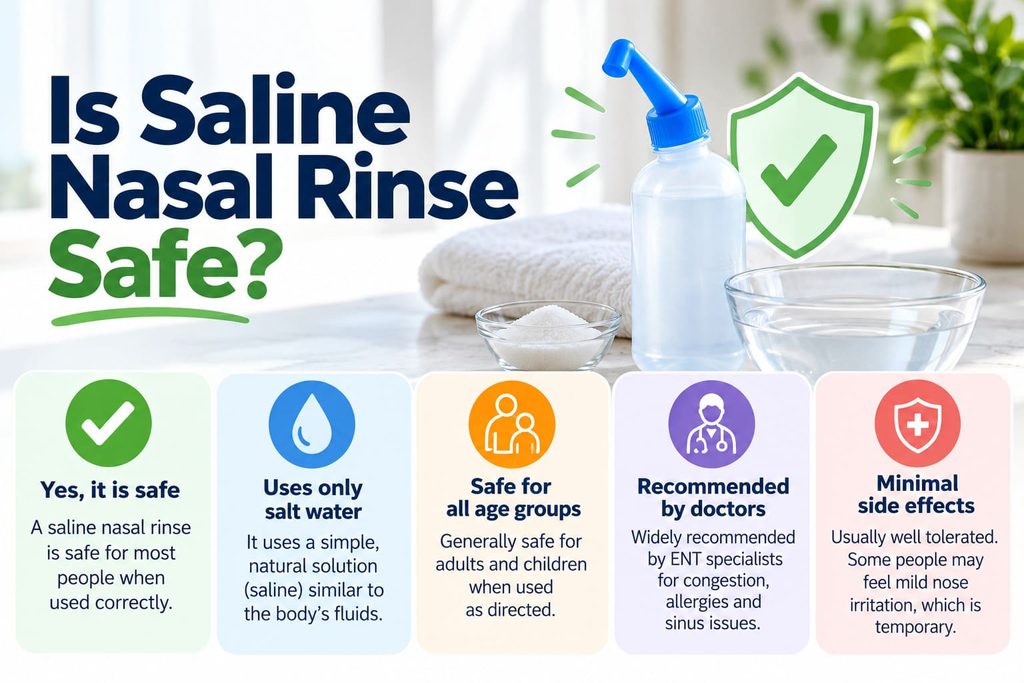
A Saline Nasal Rinse is generally considered safe when it is performed correctly and with appropriate water and equipment. However, improper technique or unsafe water can increase the risk of irritation or infection.
Important safety practices include:
- Use distilled, sterile, or appropriately boiled and cooled water.
- Follow the instructions provided with your nasal irrigation device.
- Use the recommended amount of saline.
- Keep your nasal flushing kit clean and dry.
- Do not share your nasal rinse bottle with another person.
- Avoid forcing the solution through the nose.
- Stop if you experience significant pain, bleeding, or worsening symptoms.
If you have recently had nasal or sinus surgery or have a condition that affects your nasal passages, ask your healthcare provider whether nasal irrigation is appropriate.
When Nasal Congestion Needs Medical Attention
Nasal congestion is often related to temporary conditions such as a cold or allergies. However, persistent or severe congestion may have another underlying cause and should be medically evaluated.
Consider contacting a healthcare provider if congestion:
- Continues for an extended period without improvement
- Frequently returns
- Interferes with sleep or daily activities
- Is accompanied by significant facial pain or pressure
- Occurs with persistent fever
- Is associated with recurrent sinus problems
- Causes difficulty breathing
- Is accompanied by significant nosebleeds or other concerning symptoms
A Saline Nasal Rinse may provide supportive relief, but it should not be used to delay medical evaluation when symptoms are severe, persistent, or unusual.
Why Choose Primary Care of Southern Texas for Nasal and Sinus Care?
At Primary Care of Southern Texas, we take a patient-centered approach to evaluating nasal congestion, sinus infection, allergies, and other common health concerns. Our providers consider your symptoms, health history, medications, and other relevant factors when determining the appropriate next steps.
- Personalized evaluation: Your provider can review the nature, duration, and severity of your nasal symptoms to better understand what may be causing them.
- Comprehensive assessment: Congestion can have several possible causes, including allergies, infections, environmental irritants, and other conditions. A thorough evaluation can help identify the likely cause.
- Practical guidance: We can discuss supportive measures, including appropriate nasal care, when they may be suitable for your symptoms.
- Treatment planning: If your symptoms require medical treatment, your provider can discuss appropriate options based on the underlying cause.
- Ongoing care: For recurring or persistent symptoms, follow-up care can help monitor your condition and determine whether additional evaluation is needed.
Our goal is to provide convenient, compassionate primary care while helping you understand your symptoms and make informed decisions about your health. We focus on personalized care based on your individual symptoms and concerns. Our team can also guide you toward appropriate treatment and follow-up when needed.
Get Medical Care for Persistent Congestion in Cypress, TX
If nasal congestion, sinus pressure, allergies, or other nasal symptoms continue despite home care, professional evaluation can help identify the possible cause.
Primary Care of Southern Texas serves patients in Cypress and nearby communities, including Hockley, Waller, Tomball, Magnolia, and Katy. Contact our office to discuss your symptoms and determine whether an evaluation is appropriate.
Contact Primary Care of Southern Texas to schedule an appointment:
Primary Care of Southern Texas
Cypress Medical Plaza, 27160 US-290 Suite #207
Cypress, TX 77433
Phone: (713) 673-8774
Email: backoffice@stxprimarycare.com
Conclusion
A Saline Nasal Rinse can be a useful supportive method for clearing mucus, allergens, and irritants from the nasal passages. It may help with congestion associated with colds, allergies, and some sinus symptoms when used correctly.
Safe nasal irrigation depends on using appropriate saline solution, safe water, and a clean device. If congestion is persistent, severe, recurrent, or accompanied by concerning symptoms, speak with a healthcare provider rather than relying only on a nasal flush saline routine.
FAQs – Saline Nasal Rinse for Congestion: How It Works and When to Use It
Q1. Are saline rinses good for your nose?
Ans. Yes. A saline rinse can help wash away mucus, allergens, dust, and other irritants from the nasal passages. It may also help moisturize the nose and provide temporary relief from congestion.
Q2. How to do a saline nasal rinse at home?
Ans. Use a nasal rinse kit or saline nasal rinse bottle with an appropriate saline solution and distilled, sterile, or properly boiled and cooled water. Follow the device instructions and rinse gently without forcing the solution through your nose.
Q3. Can you use saline nasal rinse daily?
Ans. Some people may use a saline nasal rinse daily, depending on their symptoms and individual needs. However, frequent use can cause dryness or irritation in some people, so follow product instructions and ask a healthcare provider if you are unsure.
Q4. When not to do saline nasal rinse?
Ans. Avoid nasal irrigation if it causes significant pain, bleeding, or worsening symptoms. People with certain nasal conditions or those who have recently undergone nasal or sinus surgery should ask their healthcare provider before using a nasal flushing kit.
Q5. When is the best time of day to do a nasal rinse?
Ans. There is no single best time for everyone. Some people prefer using a nasal rinse in the morning or before bedtime, depending on when congestion or allergy symptoms are most bothersome. If you use a nasal medication spray, ask your healthcare provider about the appropriate timing and order.