
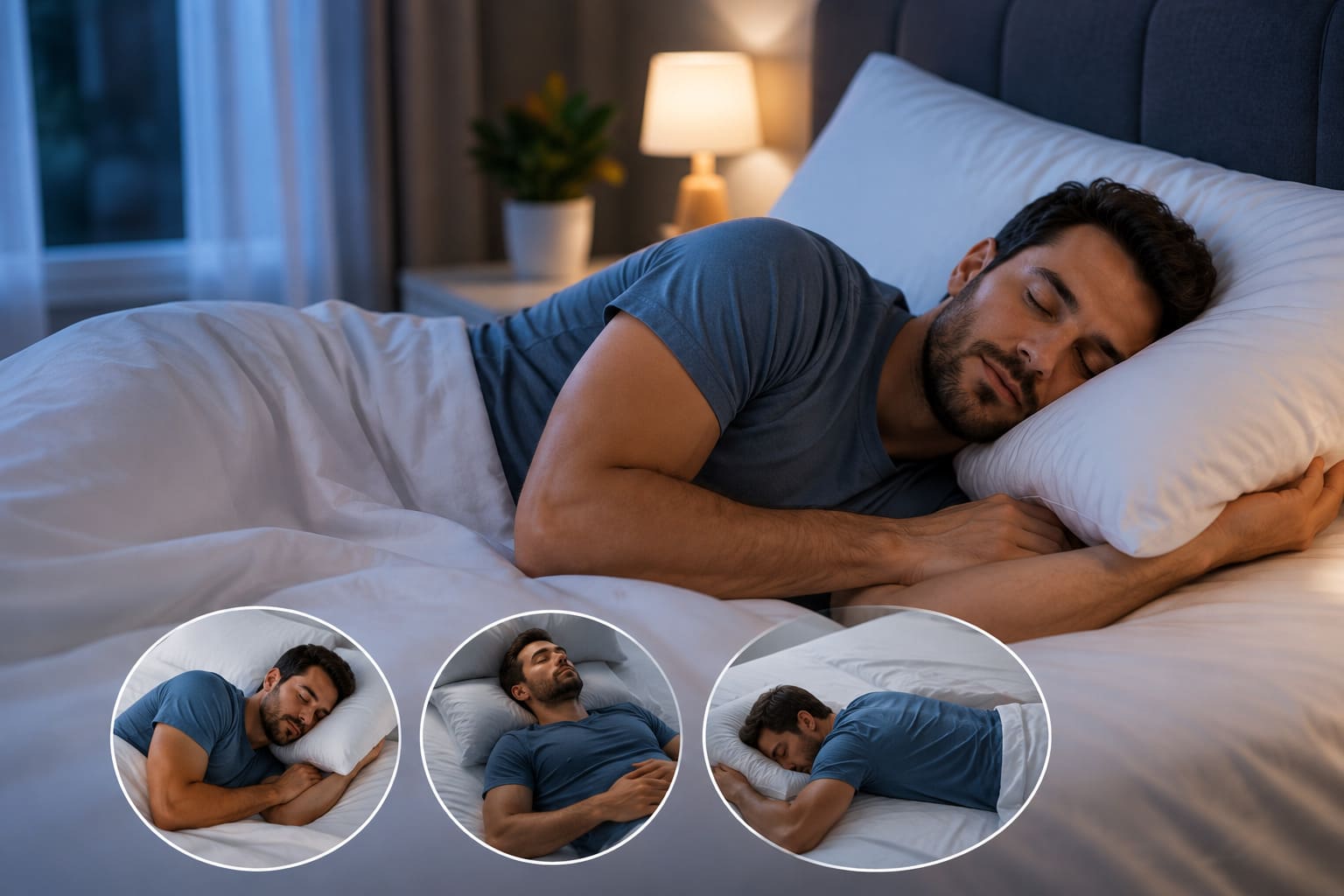
Sleep apnea can affect your breathing, sleep quality, and overall well-being, and your sleeping position may influence how often breathing interruptions occur during the night. For many people with obstructive sleep apnea (OSA), sleeping on the side rather than the back may help keep the airway more open and reduce breathing interruptions.
The best sleep position for sleep apnea can vary depending on the type and severity of sleep apnea, your symptoms, body position, and whether you use treatments such as a CPAP machine. While changing your sleeping position may help some people, it should not replace professional diagnosis or prescribed treatment. This guide explains how sleep position affects sleep apnea, ways to improve your sleeping position, and when you should talk with a healthcare provider.
What Happens to Your Airway When You Sleep?
During sleep, the muscles that help keep your upper airway open naturally relax. In people with obstructive sleep apnea, the throat can become narrowed or blocked when these tissues relax, which can interrupt normal breathing.
When you lie on your back, gravity may allow the tongue and other soft tissues to move backward and contribute to airway narrowing. For some people with OSA, breathing interruptions are therefore more frequent when sleeping in the supine position, meaning on the back.
These interruptions can cause symptoms such as:
- Loud or frequent snoring
- Gasping or choking during sleep
- Repeated nighttime awakenings
- Morning headaches
- Daytime sleepiness
- Difficulty concentrating
- Waking with a dry mouth
- Feeling tired even after spending enough time in bed
Sleep position is only one factor involved in sleep apnea. While the best sleep position for sleep apnea may help some people manage symptoms, airway anatomy, body weight, age, nasal congestion, alcohol use, medications, and other health factors may also influence symptoms.
How Sleep Position Can Affect Sleep Apnea
Your sleep position and snoring can be closely related. Some people snore more when sleeping on their back because the airway may become narrower in that position.
For people with positional OSA, changing from back sleeping to side sleeping may reduce the frequency or severity of breathing interruptions. The American Academy of Sleep Medicine recognizes positional therapy as a possible treatment approach for selected people whose OSA is significantly worse when sleeping on their back.
However, not everyone with sleep apnea responds equally to position changes. While the best sleep position for sleep apnea may help some people, others may continue to experience significant breathing interruptions even when sleeping on their side. This is why a sleep evaluation can be important before relying on OSA positional therapy as the main treatment.
What Is the Best Sleep Position for Sleep Apnea?
1.Side Sleeping
For many people with obstructive sleep apnea, side sleeping is generally considered the best sleep position for sleep apnea.Sleeping on your side may help reduce the tendency of the tongue and other soft tissues to move backward and narrow the airway.
The National Heart, Lung, and Blood Institute recommends that some people with sleep apnea sleep on their side rather than their back because this may help keep the airway open. If you are wondering about the best position to sleep with sleep apnea, starting with a comfortable side-sleeping position may be helpful.
2.Sleeping on Your Left Side
Sleeping on your left side can be comfortable for many people and may help reduce airway obstruction compared with back sleeping.
There is not a universal rule that everyone with sleep apnea must sleep on the left side. Comfort, other medical conditions, and personal sleep habits should also be considered.
3.Sleeping on Your Right Side
Right-side sleeping can also provide the benefits associated with avoiding the supine position, making it a potential option when considering the best sleep position for sleep apnea.
For many people with positional sleep apnea, the more important factor is staying off the back rather than choosing one specific side.
4.Sleeping on Your Back
Back sleeping may worsen obstructive sleep apnea for some people.When you lie flat on your back, gravity can contribute to backward movement of the tongue and soft tissues, potentially narrowing the airway.
This is one reason why changing from back sleeping to side sleeping may help some people with positional OSA and may be part of finding the best sleep position for sleep apnea. However, not everyone who sleeps on their back will have worse symptoms, and changing position does not replace appropriate sleep apnea treatment.
5.Sleeping on Your Stomach
Some people naturally find that sleeping on their stomach reduces snoring or breathing symptoms. However, stomach sleeping is not generally considered necessary for managing sleep apnea.It can also place stress on the neck and spine depending on your pillow and body position.
If sleeping on stomach snoring changes or improves your symptoms, discuss your experience with your healthcare provider rather than assuming that the position is treating the underlying sleep disorder.
How to Improve Your Sleep Position
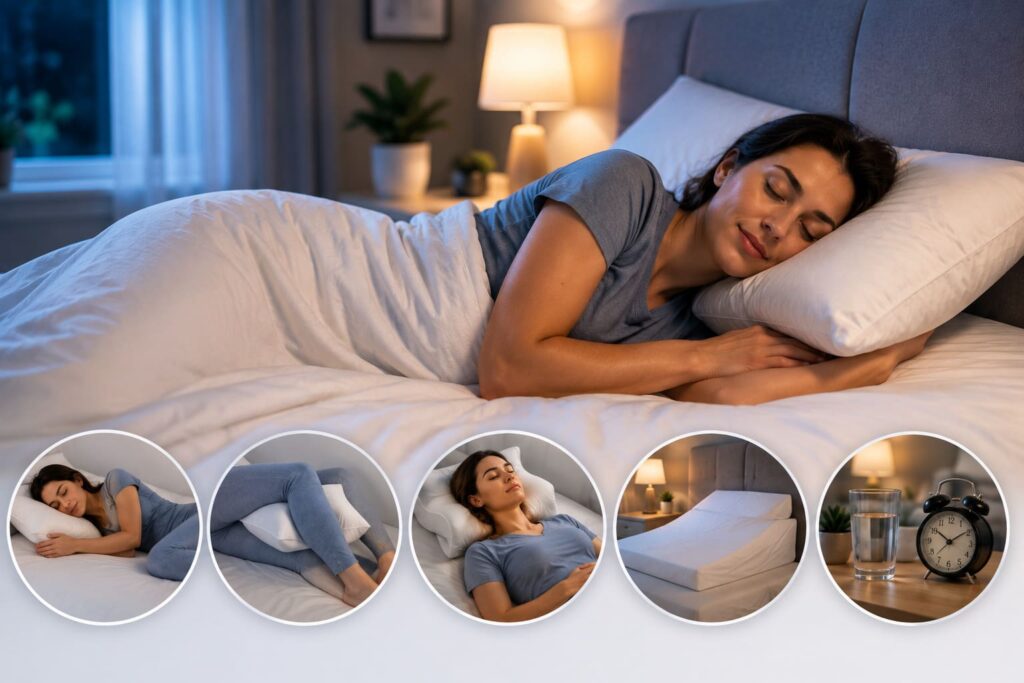
If you tend to move onto your back during the night, several strategies may help you maintain a side-sleeping position.
1. Use a Supportive Pillow
A pillow that supports your head and neck can make side sleeping more comfortable and help you maintain the best sleep position for sleep apnea throughout the night.
Your pillow should help keep your neck in a relatively neutral position rather than forcing your head sharply upward or downward.
2. Place a Pillow Between Your Knees
A pillow between your knees may make side sleeping more comfortable and help maintain a stable position throughout the night.
3. Consider a Positional Therapy Device
A positional therapy device is designed to discourage back sleeping and encourage a non-supine position.
Depending on the device, positional therapy may use vibration, alarms, or physical positioning methods to encourage a person to maintain the best sleep position for sleep apnea and remain off their back while sleeping.
4. Try Gradual Position Training
If you have always slept on your back, suddenly changing positions may feel uncomfortable.
Try spending more time on your side when going to sleep and use pillows for additional support.
5. Consider Head or Upper-Body Elevation
Some people may benefit from sleeping with the upper body slightly elevated. Current sleep-apnea guidance recognizes lateral sleeping and head-of-bed elevation as measures that may help reduce OSA severity in some situations.
However, elevation may be part of the best sleep position for sleep apnea for some people, but it should not be viewed as a substitute for medically recommended sleep apnea treatment.
Other Ways to Manage Sleep Apnea Symptoms
Finding the best sleep position for sleep apnea is only one part of managing the condition.
Depending on your diagnosis, your healthcare provider may recommend other approaches.
1.CPAP Therapy
Continuous positive airway pressure, commonly called CPAP, is an important treatment for obstructive sleep apnea. It uses a device that delivers pressurized air through a mask to help keep the airway open during sleep.
If you use a CPAP machine for side sleepers, choosing a comfortable mask and tubing arrangement can make side sleeping easier.
A CPAP machine side sleeper setup may require attention to:
- Mask fit
- Tubing position
- Pillow design
- Sleeping position
- Air leaks
- Overall comfort
If you have difficulty sleeping on your side while using CPAP, talk with your healthcare provider or sleep professional about adjusting your equipment and fit for the best sleep position for sleep apnea.
2.Healthy Lifestyle Habits
Healthy lifestyle habits may also support sleep apnea management. Depending on your individual circumstances, these may include maintaining a healthy weight, getting regular physical activity, avoiding tobacco, and limiting alcohol.
3.Oral Appliance Therapy
Some people with obstructive sleep apnea may be candidates for oral appliance therapy. These devices are designed to help maintain airway space during sleep and may complement the best sleep position for sleep apnea as part of an individualized treatment plan.
4.Other Treatments
Treatment for mild sleep apnea may include lifestyle changes, positional therapy, oral appliances, or PAP therapy, depending on individual needs. Central sleep apnea requires different treatment based on its underlying cause and should be guided by a healthcare professional.
Can Changing Your Sleep Position Cure Sleep Apnea?
Changing your sleeping position may improve symptoms for some people, particularly those with positional obstructive sleep apnea.However, the best sleep position for sleep apnea does not necessarily cure sleep apnea.
Some people continue to experience breathing interruptions even when sleeping on their side. The American Academy of Sleep Medicine notes that not all patients normalize their apnea-hypopnea index (AHI) when sleeping in a non-supine position.
For this reason, positional therapy should be considered as part of an individualized treatment plan rather than a universal cure.If you have been diagnosed with sleep apnea, continue your prescribed treatment unless your healthcare provider recommends a change.
Warning Signs That You Need Medical Evaluation
You should talk with a healthcare provider if you regularly experience symptoms that may indicate sleep apnea.
Medical evaluation may be appropriate if you:
- Snore loudly on a regular basis
- Wake up gasping or choking
- Stop breathing during sleep according to a bed partner
- Feel excessively tired during the day
- Wake with headaches
- Have difficulty concentrating
- Experience repeated nighttime awakenings
- Have persistent sleep problems
- Continue having symptoms despite changing your sleep position
Sleep apnea can affect sleep quality and overall health, so persistent symptoms should not be ignored.If you have severe breathing difficulty or another medical emergency, seek emergency medical care.
About Primary Care of Southern Texas
At Primary Care of Southern Texas, patient-focused primary care is designed around understanding each patient’s symptoms, medical history, lifestyle, and individual healthcare needs.
Sleep-related symptoms can have different causes, which is why personalized evaluation is important. A primary care provider can discuss symptoms such as persistent snoring, daytime fatigue, nighttime breathing problems, and other concerns and determine appropriate next steps.
How Primary Care Can Support Sleep Apnea Management
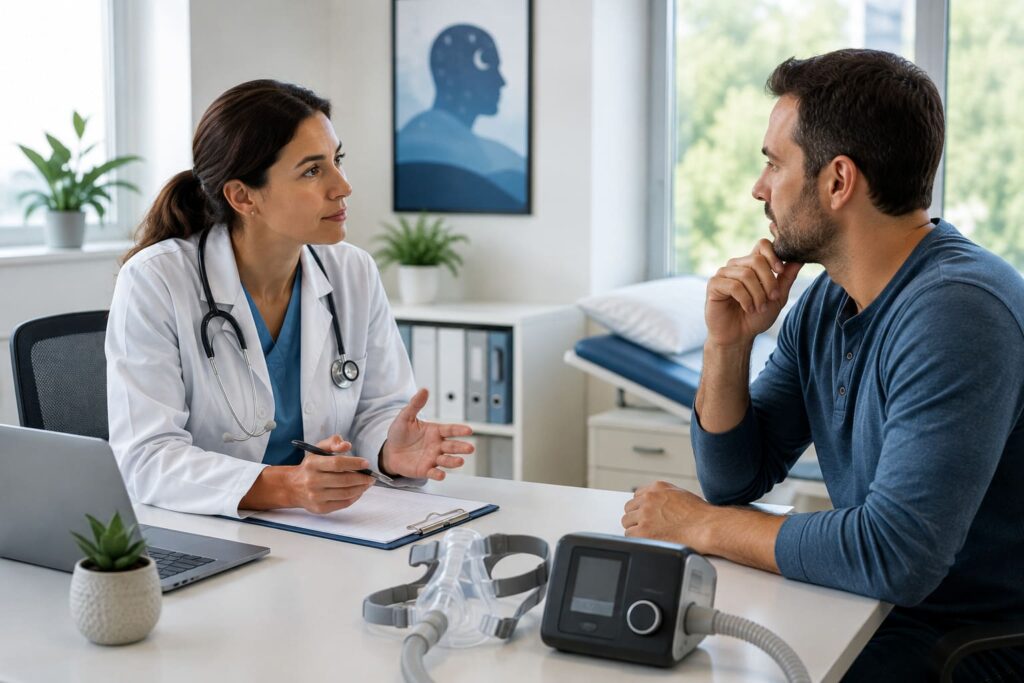
Primary care can be an important part of recognizing and managing sleep-related breathing concerns.
Your provider may help with:
- Reviewing your sleep-related symptoms
- Discussing your medical history
- Identifying possible risk factors
- Evaluating persistent snoring
- Discussing daytime fatigue and sleep quality
- Determining whether further sleep evaluation may be appropriate
- Reviewing existing sleep apnea treatment
- Discussing lifestyle factors that may affect symptoms
- Helping coordinate additional care when needed
If your symptoms suggest sleep apnea, your provider can discuss whether a sleep study or other evaluation may be appropriate.
Why Choose Primary Care of Southern Texas for Sleep Apnea Care in Cypress, TX?
At Primary Care of Southern Texas, the approach focuses on listening to patient concerns and providing clear explanations of healthcare options.
The practice can provide support with:
- Personalized evaluation of symptoms: Your provider can review symptoms such as snoring, daytime fatigue, nighttime breathing difficulties, and disrupted sleep to better understand your concerns. This evaluation can help determine whether the best sleep position for sleep apnea may be helpful as part of your overall care.
- Review of medical history: Your medical history, existing health conditions, medications, and lifestyle factors can influence sleep-related symptoms. Reviewing these details helps your provider recommend appropriate next steps based on your individual needs.
- Discussion of sleep-related concerns: You can discuss concerns such as difficulty staying asleep, waking up gasping, loud snoring, or feeling tired during the day. Your provider can help identify whether these symptoms may require further evaluation.
- Preventive healthcare: Regular primary care visits can help monitor your overall health and identify risk factors that may contribute to sleep problems. Preventive care can also support healthy habits that complement sleep apnea management.
- Ongoing primary care: Regular follow-up allows your provider to monitor changes in your symptoms and discuss whether your current management approach continues to meet your needs. This may include reviewing how well the best sleep position for sleep apnea is working alongside other recommended treatments.
- Guidance about appropriate next steps: If your symptoms suggest sleep apnea, your provider can discuss whether additional evaluation, such as a sleep study or specialist referral, may be appropriate.
If you are experiencing persistent snoring, daytime fatigue, or other possible symptoms of sleep apnea, discussing your concerns with a healthcare provider can be an important first step.
Schedule Your Sleep Apnea Evaluation in Cypress, TX
If you are struggling with snoring, poor-quality sleep, daytime fatigue, or possible sleep apnea symptoms, professional evaluation can help you better understand the possible causes and determine whether the best sleep position for sleep apnea may support your overall sleep apnea management.
Primary Care of Southern Texas can provide personalized primary care and help you discuss your sleep-related concerns and appropriate next steps.
Primary Care of Southern Texas
Address: Cypress Medical Plaza, 27160 US-290, Suite #207, Cypress, TX 77433
Phone: +1 713-673-8774
Email: backoffice@stxprimarycare.com
Conclusion
Finding the best sleep position for sleep apnea may help some people reduce breathing problems during sleep, particularly when symptoms are worse while sleeping on the back. Side sleeping is often recommended for people with positional obstructive sleep apnea because it may help keep the airway more open.
However, sleep position is only one part of sleep apnea management. Depending on the type and severity of your condition, you may need additional treatment such as CPAP, an oral appliance, lifestyle changes, positional therapy, or other medically recommended care.
If you regularly snore, wake up gasping, experience excessive daytime sleepiness, or suspect you may have sleep apnea, talk with a healthcare provider about your symptoms and appropriate evaluation.
FAQs – What Is the Best Sleep Position for Sleep Apnea? A Complete Guide
Q1. What is the best sleep position for sleep apnea?
Ans. For many people with obstructive sleep apnea, side sleeping may be the most helpful position because it can reduce airway narrowing compared with sleeping on the back. However, the best position varies from person to person.
Q2. Is sleeping on your back bad for sleep apnea?
Ans. Sleeping on your back can worsen obstructive sleep apnea by narrowing the airway. People with positional OSA may benefit from side sleeping as part of finding the best sleep position for sleep apnea.
Q3. Is it better to sleep on your left or right side with sleep apnea?
Ans. Both left- and right-side sleeping may be preferable to back sleeping for people whose sleep apnea is position-dependent. There is no universal requirement to sleep on one particular side, so comfort and individual health considerations should also be taken into account.
Q4. Can elevating your head help with sleep apnea?
Ans. Elevating the upper body or head of the bed may help reduce sleep apnea symptoms for some people and can be considered when finding the best sleep position for sleep apnea. However, it should not replace prescribed treatment.
Q5. Can changing your sleep position cure sleep apnea?
Ans. Changing your sleep position may improve symptoms in some people with positional obstructive sleep apnea, but it does not necessarily cure the condition. Some people continue to experience significant breathing interruptions even when sleeping on their side, so appropriate evaluation and treatment remain important.