
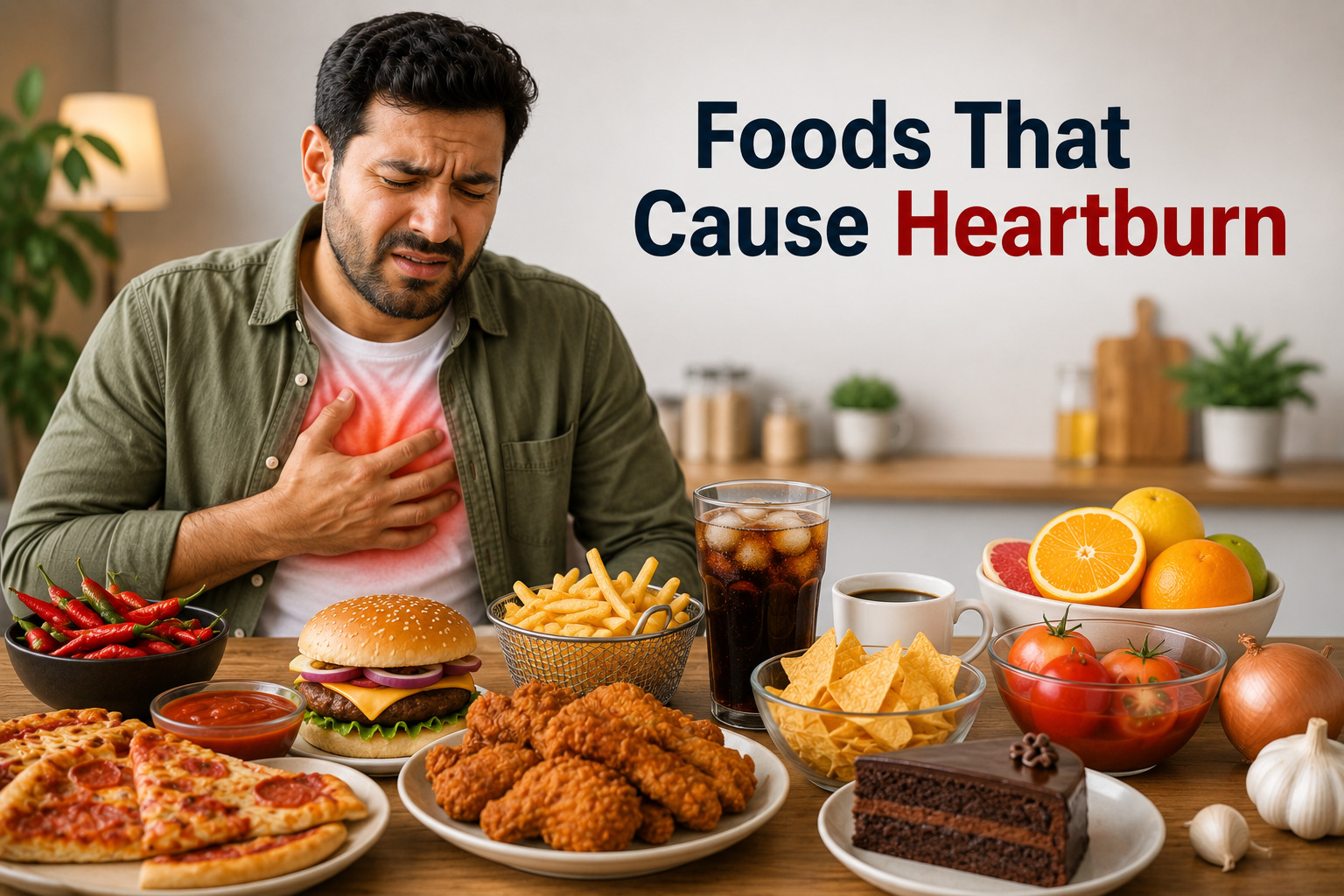
Are you looking for foods that cause heartburn? If you frequently experience a burning sensation in your chest, a sour taste in your mouth, or discomfort after eating, certain foods may be contributing to your symptoms. While food triggers can vary from person to person, some foods are more likely to worsen heartburn and acid reflux.
Knowing which foods that cause heartburn to limit or avoid can help you better manage your symptoms. In this guide, we’ll discuss 10 common food and drink triggers, what you can eat instead, lifestyle habits that may provide heartburn relief, and when persistent symptoms should be evaluated by a primary care provider.
What Is Heartburn?
Heartburn is a burning or uncomfortable feeling in the chest commonly associated with acid reflux and GERD. It may occur after meals, when lying down, or at night. Common heartburn symptoms include a burning sensation in the chest, sour or bitter taste in the mouth, regurgitation, discomfort after eating, worsening symptoms when lying down, and throat irritation.
Occasional heartburn is common, but frequent or persistent symptoms may require medical evaluation. Understanding your personal heartburn causes and food triggers can help manage symptoms.
10 Foods That Cause Heartburn
Certain foods can relax the lower esophageal sphincter, increase stomach discomfort, or otherwise make reflux symptoms worse. However, not everyone reacts to the same foods. Keeping a food and symptom diary can help you identify your personal triggers.
1. Spicy Foods
Spicy foods are among the most common foods that cause heartburn. Ingredients such as hot peppers and chili-based sauces may trigger burning or worsen existing reflux symptoms in some people.
If spicy meals frequently cause discomfort, try reducing the amount of hot spices or choosing milder alternatives.
2. Fried and High-Fat Foods
Fried foods and meals high in fat are common foods that cause heartburn and may trigger or worsen symptoms. Foods such as fried chicken, french fries, greasy burgers, and other high-fat meals can be difficult for some people to tolerate.
If these foods regularly trigger symptoms, consider baked, grilled, or steamed alternatives.
3. Citrus Fruits
Oranges, lemons, grapefruits, and other citrus fruits are acidic and may worsen symptoms for some people with acid reflux.
If citrus appears on your list of foods that cause heartburn, consider less acidic fruit options and monitor how your symptoms respond.
4. Tomatoes and Tomato-Based Foods
Tomatoes and tomato-based products can be problematic for some people. Tomato sauce, pasta sauce, pizza sauce, and other tomato-heavy meals may trigger reflux symptoms.
If these are among the foods that cause heartburn for you, try limiting them or choosing meals with less tomato-based sauce.
5. Chocolate

Chocolate may trigger heartburn in some individuals. It contains compounds that may contribute to reflux symptoms, particularly when consumed in large amounts.
If chocolate consistently appears among your foods that cause heartburn, reducing your intake may help you identify whether it is a personal trigger.
6. Coffee and Other Caffeinated Drinks
Coffee and other caffeinated beverages are common foods that cause heartburn and may worsen symptoms in some people. This can include certain teas, energy drinks, and other caffeinated drinks.
If you experience heartburn at night or after drinking coffee, consider reducing your intake and monitoring whether your symptoms improve.
7. Carbonated Beverages
Soda and other carbonated beverages can contribute to bloating and may worsen reflux symptoms for some people and even for Older Adults. Carbonation can increase stomach pressure, which may contribute to discomfort.
Choosing still water or another non-carbonated drink may be a better option if these beverages trigger your symptoms.
8. Peppermint
Peppermint and mint-containing foods may trigger reflux symptoms in some individuals. Peppermint tea, candies, and other mint products may therefore be foods to avoid with acid reflux if you notice a connection.
Try removing peppermint from your diet temporarily to see whether your symptoms improve.
9. Alcohol

Alcohol can worsen reflux symptoms for some people and may be particularly problematic when consumed with large or heavy meals.
If alcohol consistently contributes to your symptoms, limiting or avoiding it may help with heartburn relief.
10. Onions and Garlic
Raw onions and garlic can cause digestive discomfort and may contribute to reflux symptoms in some people. If they are among the foods that cause heartburn for you, consider limiting them and monitoring your symptoms after meals.
Cooking them thoroughly or using milder seasonings may make meals easier to tolerate.
Why Do Certain Foods Trigger Heartburn?
The relationship between food and reflux can vary considerably between individuals. Some foods may contribute to reflux by affecting digestion, increasing stomach pressure, or making symptoms more noticeable.
Common acid reflux causes and triggers can include:
- Eating large meals
- Eating high-fat meals
- Consuming personal trigger foods
- Eating close to bedtime
- Lying down shortly after eating
- Being overweight or obese
- Smoking
- Certain medications or medical conditions
This is why simply creating a universal list of foods that cause heartburn may not work for everyone. Your own symptoms and eating patterns are important when identifying triggers.
Foods to Limit or Avoid If You Have Heartburn
If certain foods repeatedly trigger symptoms, you don’t necessarily have to eliminate every potential trigger from your diet. Instead, consider identifying the foods that affect you personally.
Common foods to avoid with acid reflux may include:
- Spicy foods
- Fried foods
- High-fat meals
- Citrus fruits
- Tomato-based foods
- Chocolate
- Caffeinated beverages
- Carbonated drinks
- Peppermint
- Alcohol
Keeping track of what you eat and when symptoms occur can help you identify foods that trigger acid reflux and make more informed choices.
What to Eat Instead of Heartburn Trigger Foods
Avoiding foods that cause heartburn doesn’t mean following a restrictive diet. Many foods may be easier to tolerate, although triggers can vary from person to person.
Some options to consider include:
- Oatmeal
- Bananas
- Melons
- Non-citrus fruits
- Vegetables
- Lean proteins
- Whole grains
- Low-fat dairy products, if tolerated
- Water and non-carbonated beverages
These may be among the foods that help acid reflux for some people. However, there is no single food that works for everyone, so pay attention to your body’s response.
Best Foods for Heartburn
If you’re wondering what to eat for heartburn, choose smaller, balanced meals that contain lean protein, whole grains, vegetables, and non-acidic fruits.
The best foods for heartburn are generally those that you personally tolerate well without triggering symptoms.
Lifestyle Tips to Reduce Heartburn and Acid Reflux
Changing your eating habits can be just as important as identifying foods that cause heartburn.
1.Eat Smaller Meals
Large meals can increase pressure in the stomach and may make reflux symptoms more likely. Smaller meals throughout the day may be easier to tolerate.
2.Avoid Lying Down After Eating
Try to remain upright after meals rather than lying down immediately. Eating several hours before bedtime may also help reduce nighttime symptoms.
3.Identify Your Personal Triggers
A food diary can help you recognize patterns between specific foods and your symptoms. This can make it easier to determine which foods that cause heartburn you should limit.
4.Make Better Choices Before Bedtime
If you experience heartburn at night, avoid large meals and known trigger foods close to bedtime. Maintaining an appropriate gap between dinner and lying down may help.
5.Maintain a Healthy Weight
If you are overweight, gradual weight loss may help reduce reflux symptoms. Discuss a suitable approach with your healthcare provider, especially if foods that cause heartburn are also affecting your symptoms.
When Should You See a Doctor for Heartburn?
Occasional heartburn may not be a serious concern, but persistent heartburn should not be ignored. Frequent symptoms may require evaluation to determine whether an underlying condition, such as gastroesophageal reflux disease (GERD), could be involved.
Consider speaking with a healthcare provider if you experience:
- Frequent or persistent heartburn
- Symptoms that interfere with daily activities
- Difficulty swallowing
- Persistent nausea or vomiting
- Unexplained weight loss
- Symptoms that do not improve with lifestyle changes
- Repeated nighttime symptoms
Seek urgent medical attention for severe chest pain, particularly when it occurs with shortness of breath, sweating, dizziness, or pain spreading to the arm, jaw, neck, or back, because these symptoms can have causes other than heartburn.
How Primary Care Can Help With Frequent Heartburn
If dietary changes are not providing enough heartburn relief, a primary care provider can evaluate your symptoms and medical history. Your provider may ask about your eating habits, medications, symptom patterns, and potential triggers.
Depending on your symptoms, your provider may recommend lifestyle changes or discuss treatment options. This can include guidance about acid reflux medicine, including when medications such as an antacid for heartburn or an antacid for acid reflux may be appropriate.
Avoid relying on home remedies or over-the-counter medications for ongoing symptoms without discussing persistent heartburn and foods that cause heartburn with a healthcare professional.
Why Choose Primary Care of Southern Texas for HeartBurn Treatment?
At Primary Care of Southern Texas, we understand that frequent heartburn can affect your comfort, eating habits, and daily routine. Our primary care team takes time to understand your symptoms and identify potential factors contributing to your discomfort.
Whether certain foods that cause heartburn are affecting you or your symptoms occur without an obvious food trigger, our team can help evaluate your concerns and recommend appropriate next steps.
Our patient-focused approach includes:
- Reviewing your symptoms and medical history
- Discussing potential food and lifestyle triggers
- Evaluating persistent heartburn
- Providing personalized healthcare guidance
- Discussing appropriate treatment options
- Helping you understand when further evaluation may be needed
Schedule Your Heartburn Evaluation
Don’t let frequent heartburn continue to affect your daily life. If you have persistent symptoms or are unsure which foods that cause heartburn may be triggering your discomfort, a primary care evaluation can help you better understand your symptoms.
At Primary Care of Southern Texas, our team is here to provide personalized care and help you develop an appropriate plan for managing recurring heartburn and reflux symptoms.
Primary Care of Southern Texas
Address: Cypress Medical Plaza, 27160 US-290, Suite #207, Cypress, TX 77433
Phone: 7136738774
Email: backoffice@stxprimarycare.com
Conclusion
Identifying foods that cause heartburn can be a useful step toward managing occasional reflux symptoms. Spicy foods, fried foods, citrus fruits, tomatoes, chocolate, caffeine, carbonated beverages, peppermint, alcohol, and onions or garlic may trigger symptoms in some people.
However, food triggers vary from person to person. Paying attention to your symptoms, choosing foods you tolerate well, making healthy lifestyle changes, and seeking medical advice for persistent heartburn can help you manage your digestive health more effectively.
FAQs – 10 Foods That Cause Heartburn: Foods to Limit or Avoid
Q1. What to eat to limit heartburn?
Ans. Choose smaller, balanced meals with foods you tolerate well, such as vegetables, whole grains, lean proteins, and non-citrus fruits. Avoiding your personal trigger foods may also help.
Q2. What foods should I avoid if I have heartburn?
Ans. Common foods to avoid with acid reflux may include spicy foods, fried foods, high-fat meals, citrus fruits, tomatoes, chocolate, caffeine, carbonated drinks, peppermint, and alcohol. However, individual triggers vary.
Q3. Can I eat eggs during heartburn?
Ans. Some people can eat eggs without problems, while others may notice symptoms, particularly with fried eggs or preparations containing a lot of fat. Try a lower-fat preparation if eggs seem to trigger your symptoms.
Q4. Are potatoes good for acid reflux?
Ans. Plain potatoes may be tolerated by some people, particularly when baked or boiled rather than fried. High-fat preparations such as french fries may be more likely to worsen symptoms.
Q5. What drink removes heartburn?
Ans. There is no single drink that reliably removes heartburn for everyone. Water may be a suitable choice, while carbonated, caffeinated, or alcoholic beverages may worsen symptoms in some people. Persistent symptoms should be discussed with a healthcare provider.